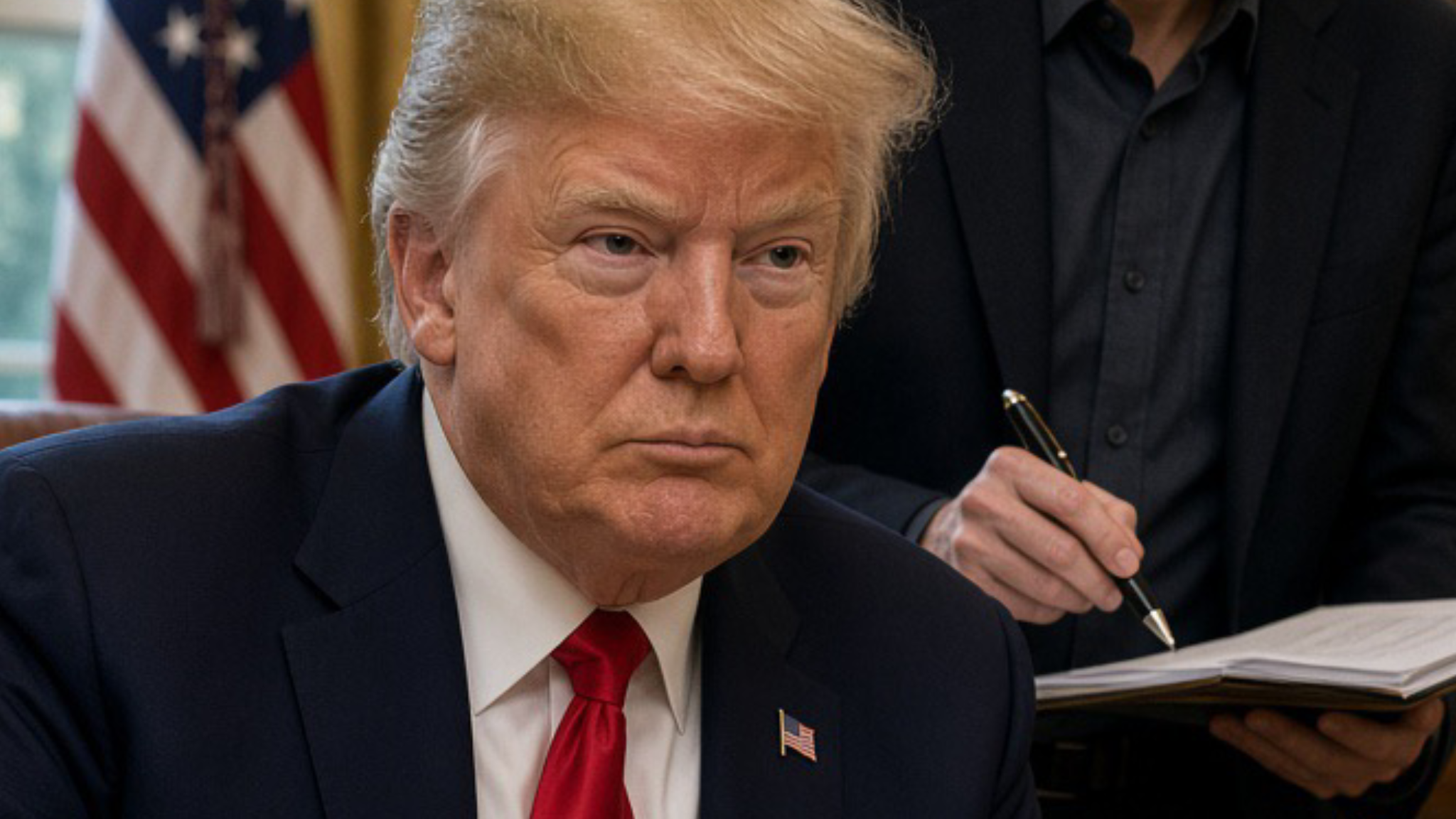
Trump is moving to put the White House in control of which NIH grants get funded, according to a Politico report published Saturday, September 19. He has directed his budget director, Russ Vought, to draft an executive order creating a board that would decide which research the National Institutes of Health pays for.
The NIH is the largest funder of medical research in the country. Its budget runs about $48 billion a year, and Congress is the body that approves that money and says what it is for. That funding is behind a huge share of the research into cancer, sickle cell disease, maternal mortality, HIV, diabetes and heart disease, and it flows to universities, teaching hospitals and medical schools all over the country rather than being spent inside one government building.
Here is how the money currently gets handed out. A scientist or a university applies with a detailed proposal. Panels of outside scientists who work in that same field read the applications and score them on the quality of the science, a process called peer review. The applications with the best scores get funded. The system was built that way on purpose so that whoever happens to be in the White House cannot pick research based on politics.
The proposed board would sit on top of all of that. Politico reported, citing two administration officials familiar with the meeting, that the board would include NIH Director Jay Bhattacharya and Vought, who runs the White House Office of Management and Budget. The detail doing the heaviest lifting is that the board would have to reach unanimous decisions on grant awards. Unanimous means everybody has to agree. In practice that means a single member could stop any grant from being funded, for any reason, with no requirement to explain the science behind the call. It would give Vought, a political appointee with no medical research background, direct say over how congressionally appropriated money gets spent.
None of this happens in a vacuum. Over the past year the administration froze or canceled research grants at numerous institutions as part of a broader push against federal spending at major universities. Labs shut down mid study. Graduate students lost positions. Clinical trials that had already enrolled patients were left hanging. The administration has defended those cuts by saying the government should fund only solid science and that it is reversing years of misguided priorities. What the proposed board would do is make that kind of decision routine and permanent rather than something that requires a fight each time.
For Baller Alert readers, the stakes are specific. Sickle cell disease affects Black Americans more than any other group in this country, and the treatments that have come out in the last few years, including gene therapies, exist because of federally funded research that ran for decades before anything reached a patient. Black women die from pregnancy related causes at roughly three times the rate of white women, and the studies tracking why that happens and what interventions actually work are funded the same way. The same goes for research on hypertension, prostate cancer, triple negative breast cancer, lupus and diabetes, all of which hit Black communities harder. Grants also fund the pipeline itself, paying for the labs and training programs at HBCUs and other schools where Black scientists and doctors come up.
There is a second layer worth understanding. Congress controls federal spending under the Constitution. When lawmakers appropriate $48 billion for health research, that is an instruction about where the money goes, not a suggestion. An arrangement that lets White House appointees decide which applications clear the final gate raises the question of who is really directing that spending, and it is the kind of question that ends up in court. Similar fights over withheld funds have already landed there over the past year.
What has not happened yet matters too. No executive order has been signed. What was reported is a draft instruction described by two officials who were not named. The Office of Management and Budget, the White House and the Department of Health and Human Services, which oversees the NIH, did not respond to Reuters when asked about it. So the shape of the board, who sits on it and whether it ever takes effect are all still open.
What is clear is the direction of travel. The administration has spent a year tightening its grip on federal research money, and the reported order would formalize that grip at the exact point where a scientist finds out whether the study gets funded or not.