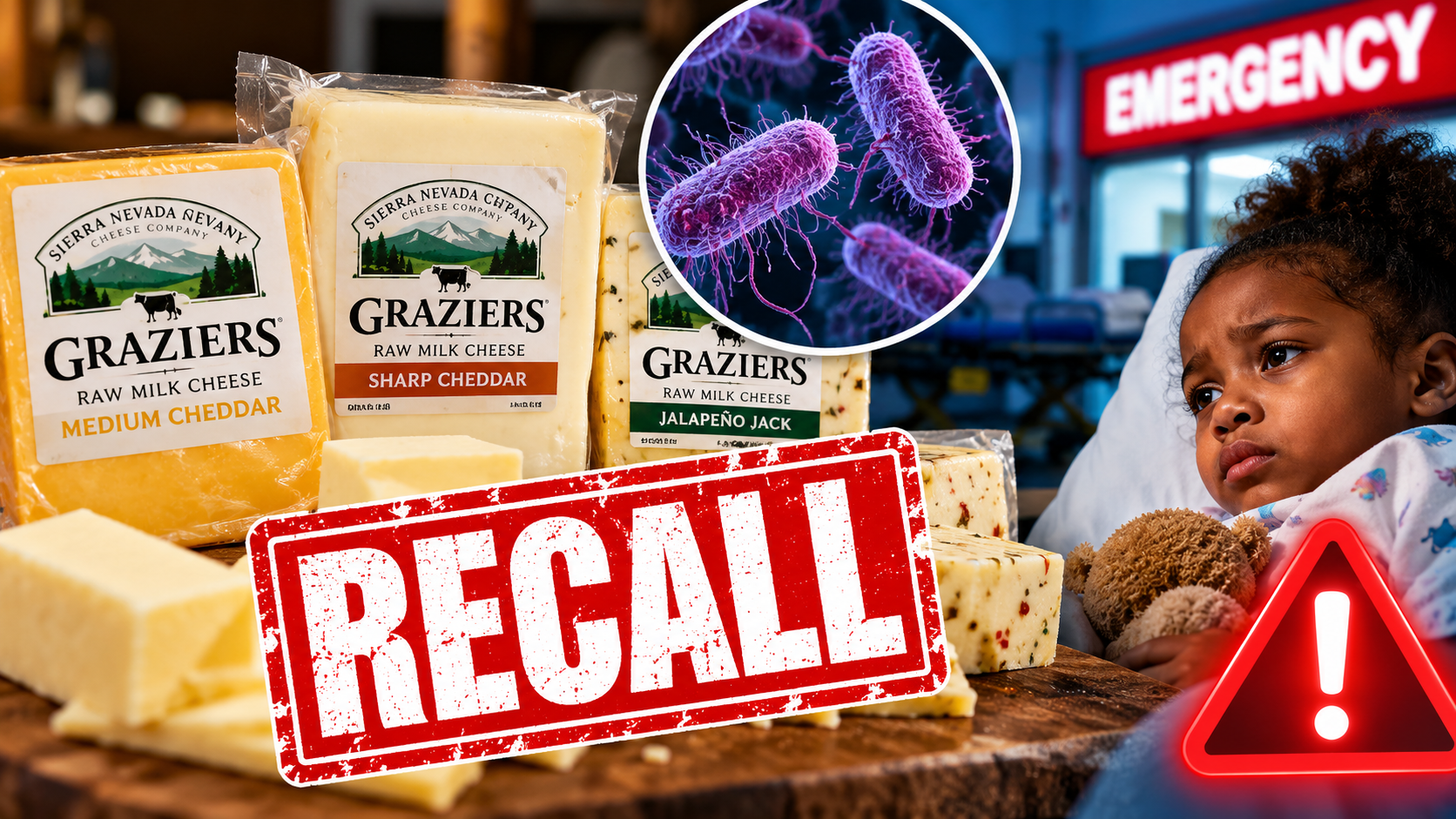
A nationwide cheese recall is drawing urgent attention after more than half of the people sickened in a multistate E. coli outbreak were identified as children age 5 or younger. According to the Centers for Disease Control and Prevention, 13 people across nine states have been infected in an E. coli O26 outbreak linked to Graziers raw milk cheeses sold by Sierra Nevada Cheese Company. Eight of the 13 patients have been hospitalized, and three have developed hemolytic uremic syndrome, also known as HUS, a serious complication that can cause kidney failure. No deaths had been reported as of the CDC’s September 25 update.
The illnesses have been reported in California, Colorado, Georgia, Kentucky, Michigan, Nevada, Oregon, Tennessee, and Utah, according to the Food and Drug Administration. California and Nevada have three reported cases each, while the other seven states have one case apiece.
The age of the patients has made the E. coli outbreak particularly concerning. According to the CDC, patients range from 1 to 58 years old, and more than half are children age 5 or younger. Illnesses began between July 7 and August 26, 2026.
Federal officials also caution that the 13 confirmed infections may not represent the outbreak’s full reach. The CDC outbreak timeline notes that many people with E. coli infections recover without seeking medical care or being tested. It can also take three to four weeks for health officials to determine whether a newly reported illness belongs to an outbreak.
Investigators have found a strong connection between the illnesses and Sierra Nevada Graziers grass-fed raw milk cheese. According to the FDA, state and local health officials interviewed nine sick people or their caregivers about what they ate during the week before becoming ill. All nine reported consuming the company’s Graziers raw milk cheese.
The CDC also reported that whole-genome sequencing showed bacteria collected from sick patients were closely related genetically, which suggests the patients became ill after exposure to the same food source.
On September 24, the FDA contacted Sierra Nevada Cheese Company and recommended a recall. According to the FDA’s outbreak investigation, the California company agreed that day and initiated a recall covering all Graziers Raw Milk Cheeses currently on the market.
The recall includes Graziers grass-fed raw milk medium cheddar, sharp cheddar, jalapeño jack, and Monterey jack. According to the FDA, the products were sold at retailers nationwide and online in 8-ounce and 16-ounce packages. The cheeses were also supplied to food service businesses and wholesalers in 5-pound loaves.
The company said the reported illnesses have been associated with its medium cheddar but expanded its action to all Graziers Raw Milk Cheese because investigators had not identified a specific lot or date code, according to ABC News.
“We are incredibly grateful for the trust and support of our customers and community, and we appreciate your understanding as we take this precautionary step,” Sierra Nevada Cheese Company said in its statement.
The company’s official website is also displaying a recall warning telling customers not to consume Graziers Raw Milk Cheeses and advising people to dispose of the products or return them to the place of purchase for a refund.
Because the recalled cheese has a long shelf life, federal officials are urging consumers to check both refrigerators and freezers rather than assuming older purchases are safe. The FDA says anyone who has cheese outside its original packaging and cannot determine whether it is included in the recall should throw it away.
The FDA is also advising consumers, restaurants, retailers, and food service customers to carefully clean and sanitize containers, refrigerator surfaces, cutting boards, and other areas that may have come into contact with recalled cheese. Retailers that received wholesale products and repackaged them for individual sale have also been instructed to remove the products from the market.
According to the FDA, symptoms of an E. coli infection can begin within a few days after eating contaminated food or take as long as nine days to appear. Symptoms can include severe stomach cramps, diarrhea, fever, nausea, and vomiting. Some infections can cause bloody diarrhea and potentially life-threatening complications.
The CDC advises people to contact a health care provider immediately for symptoms including bloody diarrhea, diarrhea lasting more than two days without improvement, a fever above 102 degrees, vomiting severe enough that liquids cannot be kept down, or signs of dehydration such as reduced urination, a dry mouth, or dizziness when standing.
The three HUS cases reported in the outbreak are especially significant because the condition can affect the kidneys and require hospitalization. The FDA says certain pathogenic E. coli infections can also lead to longer-term complications including high blood pressure, chronic kidney disease, and neurological problems.
Health officials continue to recommend pasteurized milk and dairy products as the safer choice. The CDC specifically notes that this precaution is particularly important for children under 5 because they face a higher risk of developing severe foodborne illness.
The current outbreak comes roughly a year after a separate recall involving another Sierra Nevada Cheese Company raw milk product. In August 2025, the California Department of Food and Agriculture announced a statewide recall and quarantine of Sierra Nevada Bella Capra Raw Milk Goat Cheddar after routine state testing detected Listeria monocytogenes. State officials said no illnesses were reported in connection with that recall.
The current E. coli investigation remains ongoing. According to the FDA, investigators are still working to determine the source of the contamination and whether additional products could be affected.