The Village Where the Sun Disappears for 6 Months: Fact or Fiction?
IntroductionImagine living in a place where, for half the year, the sun simply vanishes. No golden rays, no daylight warmth, just an extended twilight or complete darkness. This might sound like a scene from a fantasy novel or an exaggeration, but such a phenomenon is a reality in certain extreme latitudes.
When we talk about a European village experiencing such an extended period without direct sunlight, we’re delving into the unique geographical and astronomical conditions of the Arctic Circle.
The question isn’t “if” it’s true, but “where” this remarkable natural event takes place and how the inhabitants adapt to it.
The Answer: Rjukan, Norway – And Its Ingenious SolutionWhile many locations within the Arctic Circle experience prolonged periods of darkness during winter, the most famous European village known for its dramatic lack of direct sunlight due to geographical features is Rjukan, Norway.
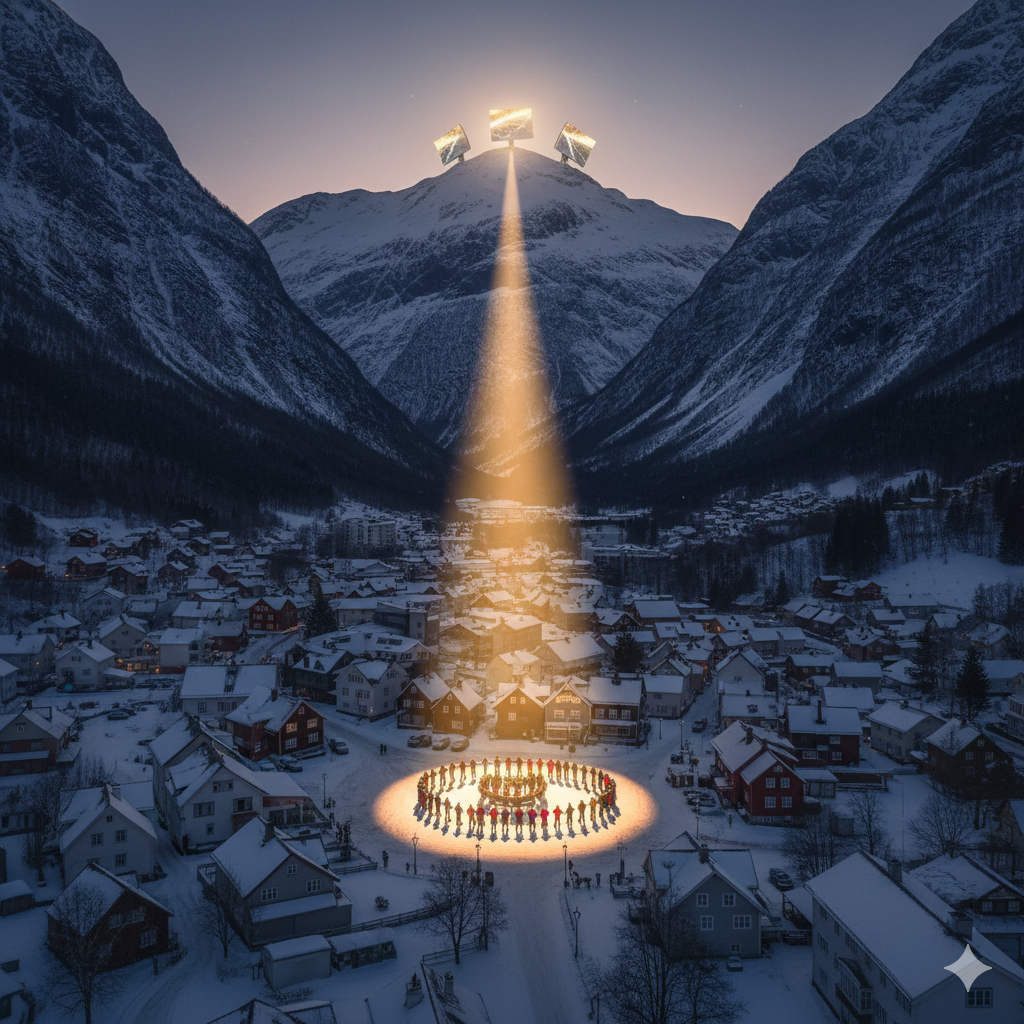
Rjukan is nestled deep within a narrow valley, surrounded by towering mountains in the Telemark region of Norway. [Image: Aerial view of Rjukan valley surrounded by tall mountains] Due to its unfortunate positioning, the sun’s rays cannot reach the valley floor for nearly six months of the year, from late September to mid-March. This means the residents live in perpetual shadow for a significant portion of winter.
Why It’s True (The Geographical Conundrum)Topography:
Rjukan’s location at the bottom of a deep valley, flanked by mountains over 1000 meters high, is the primary reason. The angle of the sun in winter is too low to ever clear the mountain peaks and cast direct light onto the village.
Arctic Proximity:
While not strictly within the Arctic Circle, its northern latitude combined with the extreme topography amplifies the effect of the low winter sun.The Ingenious Solution: The Rjukan Solar Mirrors (Solspeilet)For over a century, the people of Rjukan lived with this natural challenge. However, in 2013, an incredible and unique solution was implemented: giant solar mirrors (Solspeilet).
How it Works: Three massive, computer-controlled mirrors, each 17 square meters, were installed on a mountain 450 meters above the town. These mirrors track the sun’s movement and reflect its rays down into the town square, creating a bright, sunny spot even in the deepest winter.
[Image: Rjukan town square with a bright, sunny patch from the mirrors, surrounded by shadowed buildings]Impact:
This engineering marvel provides a much-needed psychological and physical boost to the residents, offering a patch of sunlight for people to gather, warm up, and simply enjoy the sensation of direct sun, which was previously impossible. It has transformed the village into a popular tourist attraction, drawing visitors curious to witness this blend of human ingenuity and natural challenge.
Living in the Shadows:
Adaptation and CommunityEven with the mirrors, life in Rjukan during winter is a unique experience. The long periods of darkness can affect mood and vitamin D levels. The community, however, thrives on resilience and togetherness. Winter sports are popular, and the town celebrates the return of the sun with festivals and gatherings.
Rjukan stands as a testament to humanity’s ability to adapt and even innovate in the face of nature’s most challenging conditions, turning a geographical disadvantage into a point of pride and wonder.
#Rjukan #Norway #SunlessVillage #SolarMirrors #Solspeilet #ArcticLife #UniqueTravel #Innovation #HiddenEurope