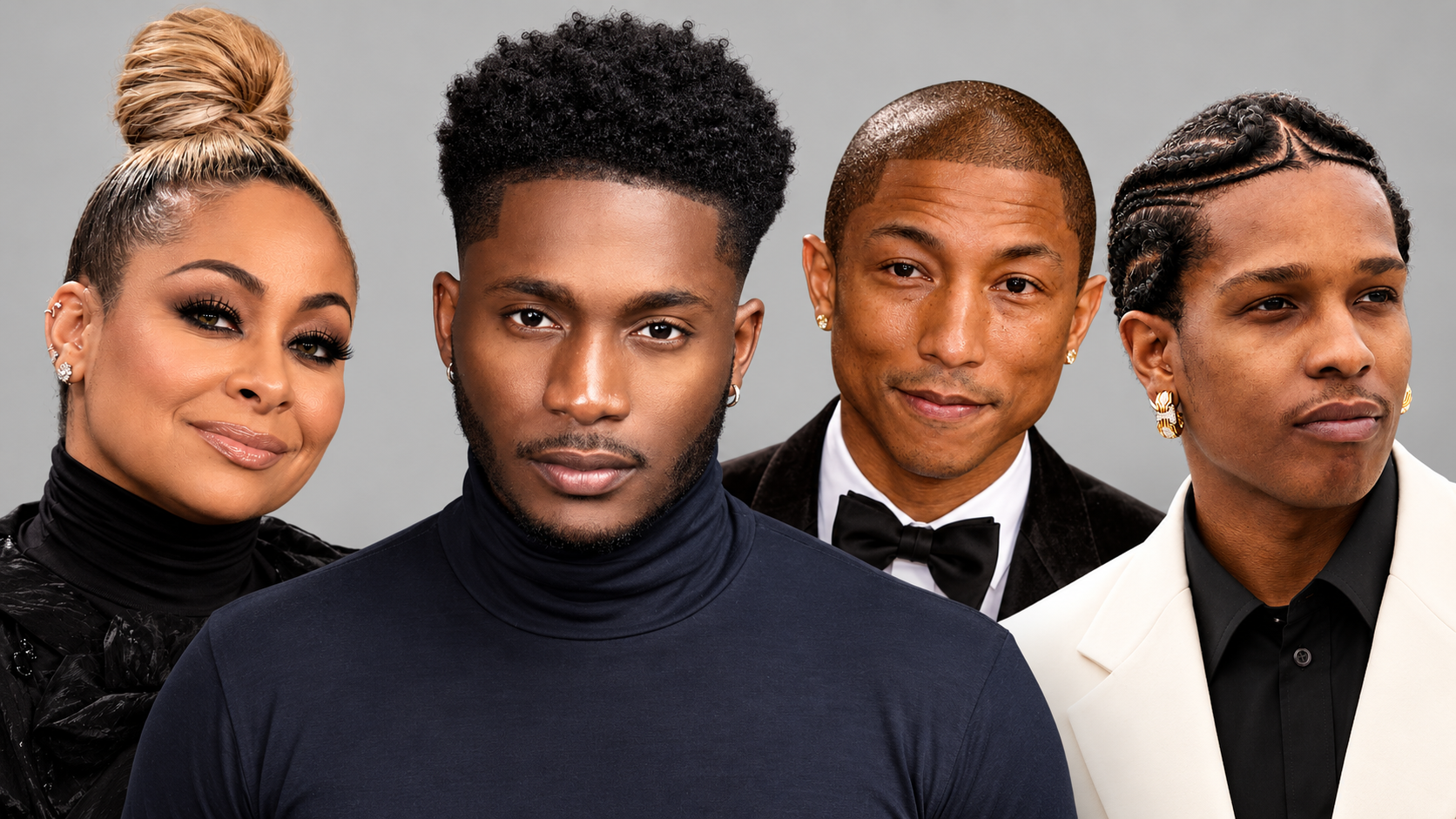
Black celebrities don’t get a pass from Black America just for being Black and famous, and Da’Vinchi is finding that out in real time.
Over the years, plenty of stars have landed in the middle of heated debates after speaking publicly about race, slavery, activism, or the Black community itself. The internet loves to call it getting “canceled,” but most of the people on this list kept their careers. Some apologized. Some doubled down. Some said they’d been misunderstood. Every one of them started a bigger conversation about what happens when a famous Black person says something that doesn’t sit right with the people who helped put them on.
Da’Vinchi
The “BMF” actor drew backlash after an October 2 appearance on Cam Newton’s “Funky Friday” podcast. Da’Vinchi said Americans have been “incompetent for a really long time.” When Newton brought up the idea that some Black people from the Caribbean, Africa, and the UK see themselves as superior to Black Americans, Da’Vinchi answered, “I think that’s true,” before adding that he didn’t think it was right.
He also argued that the way Black Americans look at the history of slavery is “cutting our legs off” and holding people back from moving forward.
The reaction was swift. Freedmen Nation, an advocacy group for Black Americans descended from people enslaved in the U.S., added him to its boycott list, and reports say he lost around 200,000 followers. Da’Vinchi is a Brooklyn-born Haitian American, which pulled the debate toward a bigger question about how Black people from different backgrounds talk about the Black American experience. He had not publicly responded to the backlash as of this writing.
Daniel Caesar
In 2019, Daniel Caesar went on Instagram Live to defend media personality YesJulz, who was facing criticism over her comments about race. During the stream, he asked, “Why are we being so mean to white people right now?” and suggested Black people were being too sensitive.
The reaction was immediate. Fans accused the R&B singer of brushing off real concerns from Black people to defend a white woman, and calls to cancel him spread fast. Caesar later said publicly that he was wrong, and he has since come back with successful music.
Kanye West
Kanye West, who now goes by Ye, delivered one of the most infamous moments in celebrity history during a 2018 visit to TMZ. Talking about slavery, he said, “When you hear about slavery for 400 years. For 400 years? That sounds like a choice.”
Former TMZ staffer Van Lathan pushed back on the spot, telling West that his comments had real-world consequences for people who still live with the impact of slavery. The comment reduced one of the most violent systems in American history to a question of mindset, ignoring the laws, violence, and terror that kept enslaved people in bondage. West later tried to clarify, but the moment remains one of the most controversial of his career.
Lil Wayne
In 2016, Lil Wayne distanced himself from the Black Lives Matter movement during an interview with ABC’s “Nightline.” Asked about the movement, he said, “What’s that got to do with me?” and pointed to his own success as a young, wealthy Black man.
Fans who were frustrated said his personal success didn’t erase the police violence and inequality affecting Black Americans. Others defended his right not to become a political spokesperson just because he’s Black. The moment raised a question that still comes up today: does fame come with a responsibility to speak on Black issues?
Terry Crews
During the 2020 racial justice protests, Terry Crews tweeted that “defeating White supremacy without White people could create Black supremacy.
The comparison landed badly, because white supremacy has historically been backed by laws, institutions, and centuries of power, and Black empowerment has never had that. Crews defended the tweet in an interview with Don Lemon on CNN, saying his message was about equality and keeping people from dividing along racial lines. The pushback lasted for days.

Stacey Dash
Stacey Dash, once best known as Dionne in “Clueless,” became one of the most polarizing Black celebrities of her era. In a 2016 Fox News appearance, she said that if Americans wanted integration, there shouldn’t be channels like BET or awards like the NAACP Image Awards. She also said there shouldn’t be a Black History Month.
Those institutions exist because Black achievement and Black stories were shut out of mainstream spaces for generations, and that was the point many viewers made in response. Dash kept sharing controversial views on race and politics in the years that followed.
Raven-Symoné
Raven-Symoné has been at the center of more than one debate about Black identity. In a 2014 interview with Oprah Winfrey, she said she didn’t want to be labeled and told Oprah, “I’m not an African American. I’m an American.”
The bigger backlash came in 2015 on “The View.” During a discussion about name-based discrimination, Raven said she wouldn’t hire someone with a name like “Watermelondrea.” Research has shown that job applicants with names perceived as Black get fewer callbacks, so the joke hit a real nerve. Raven later apologized.
A$AP Rocky
In a 2015 interview with TimeOut, A$AP Rocky said, “I don’t wanna talk about no Ferguson,” and questioned why people expected him to speak on police brutality just because he’s Black. He said his life was far removed from what was happening in Ferguson.
The comments resurfaced in 2019, when he was detained in Sweden, and Black fans were rallying for his release. In 2020, Rocky addressed them, explaining that he “used to think it was inappropriate to rap about things I didn’t help with.”
Pharrell Williams
Long before “mindset” debates took over social media, Pharrell Williams introduced the idea of the “New Black” during a 2014 interview with Oprah. He described a mentality that doesn’t blame other races for Black people’s problems, saying, “It’s not a pigmentation. It’s a mentality.”
Some heard a message of empowerment and personal accountability. Others heard something that downplayed systemic racism, suggesting Black Americans could think their way past real barriers in housing, jobs, education, policing and wealth. Pharrell’s comments became a lasting example of the tension between personal responsibility and systemic inequality.
Doja Cat
In 2020, Doja Cat faced one of social media’s biggest cancellation campaigns after old online activity resurfaced. The criticism focused on her time in online chat rooms where racist conversations took place, and on an old song whose title used a slur mocking victims of police violence.
Doja disputed several of the claims about her behavior in those chat rooms but apologized to anyone she had offended. The controversy did little to slow her down, and she became an even bigger star.
These controversies didn’t all happen for the same reasons. Some came from poorly worded arguments, others from politics, jokes, or questions of identity. Some came from statements that seemed to ignore important parts of Black history.
What they share is a complicated relationship between Black celebrities and Black audiences. Black consumers often support Black entertainers long before the mainstream catches on, and that support comes with an expectation of cultural awareness. Being Black also doesn’t mean sharing one ideology, one view of history, or one opinion about race.
And “cancellation” rarely sticks. Ye stayed famous. Lil Wayne is still one of rap’s biggest names. Pharrell kept building an empire. Daniel Caesar came back with hits. Doja Cat became a superstar.
The question for Da’Vinchi isn’t whether Black America can cancel him. It’s whether the audience that helped build his career still wants to support him after hearing what he really thinks.