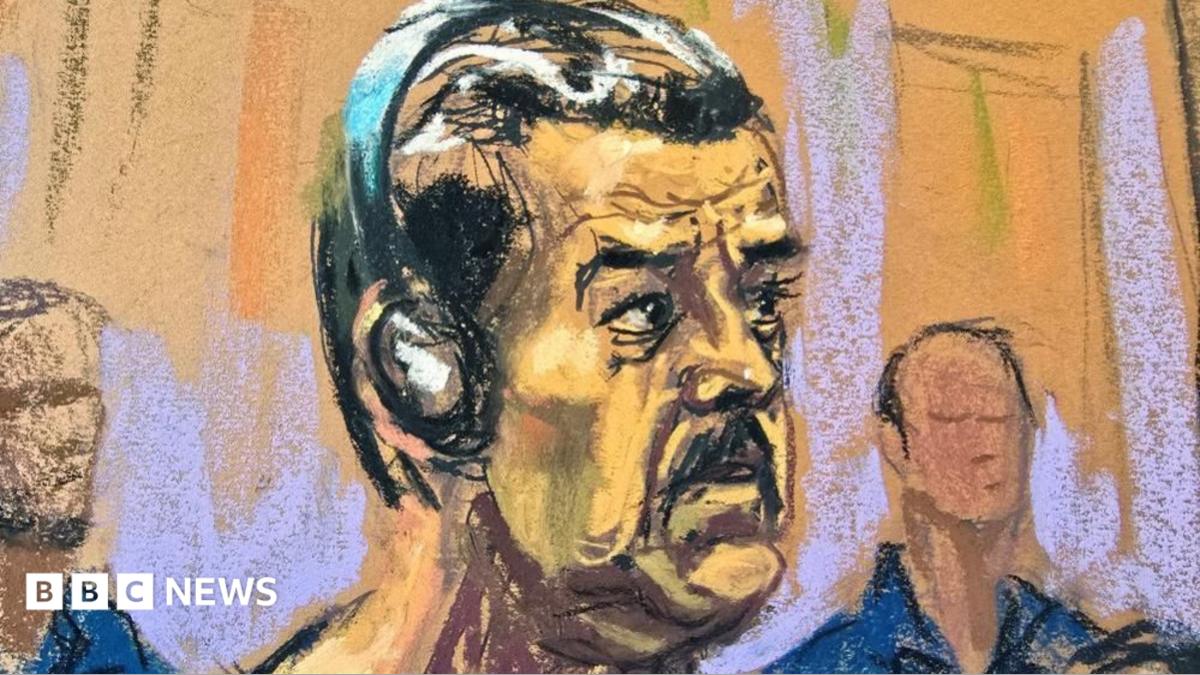
Prosecutors in the United States have accused Venezuela’s former leader Nicolás Maduro and his wife, Cilia Flores, of conspiracy to commit torture.
The fresh charges against the couple were made public on Thursday and are in addition to the drug-trafficking and weapons charges already brought against them, which they have denied.
Maduro, 63, and Flores, 69, have been in custody since January in a detention centre in Brooklyn, where they were taken after US forces seized them in a pre-dawn raid on their compound in the Venezuelan capital, Caracas.
Human rights groups in Venezuela and former prisoners have long denounced what they have described as “systematic torture” in Venezuelan jails.
The trial for both Maduro and Flores is set to begin in June 2027.
Both are being held in a detention centre in Brooklyn and are expected to remain there after Flores’s request to be moved to house arrest was denied by a judge on Thursday.
The new accusations relate to the alleged torture of US citizens who were being held in Venezuela while Maduro was in power.
The superseding indictment unsealed on Thursday accuses the former presidential couple of “entrenching themselves in power” by presiding “over a system of repression that relied on violence against political opposition, arbitrary detention, and the torture of detainees, including United States citizens”.
According to the indictment, the torture included “electric shock, asphyxiation, rape, forced nudity, prolonged isolation, starvation, punishment cells, and psychological torture”.
The prosecutors allege that the psychological torture included threats to kill victims’ families, including children.
The motivation behind the repression, according to the indictment, was to ensure that Maduro and his wife remained in power.
The prosecution accuses Flores of having played a key role in the development of the repressive system, ordering that individuals be tortured and even receiving updates on the torture of specific prisoners.
The court document alleges that she did so in order to protect members of her family who were involved in illegal activities.
The allegations contained in the superseding indictment echo many of the accusations long made by prisoners who have been released from detention in Venezuela.
Javier Tarazona, the head of a human rights group in Venezuela, told BBC Mundo’s Norberto Paredes earlier this year how he and his brother were held in a tiny punishment cell for 46 days after being arbitrarily arrested.
Another former inmate, Ángel Godoy, told BBC Mundo that he was kept isolated for months and not allowed to contact his wife, who was in turn kept in the dark about his whereabouts.
The allegations listed in the superseding indictment made public on Thursday relate to cases during Maduro’s time in power.
After his ouster, his vice-president, Delcy Rodríguez, was sworn in as interim leader with the backing of the Trump administration.
While hundreds of political prisoners have been released under an amnesty law since she has taken over power, more than 300 still remain behind bars, according to prisoners’ rights group Foro Penal.
The United Nations High Commissioner for Human Rights Volker Türk has warned that his office has received reports alleging that detainees continue to be tortured even after the seizure of Maduro.
Türk said in March that “structural and systemic human rights concerns” had persisted in Venezuela despite Maduro’s ousting.
Venezuela’s foreign minister at the time accused Türk of parroting the agenda of “extremists” by citing the allegations.