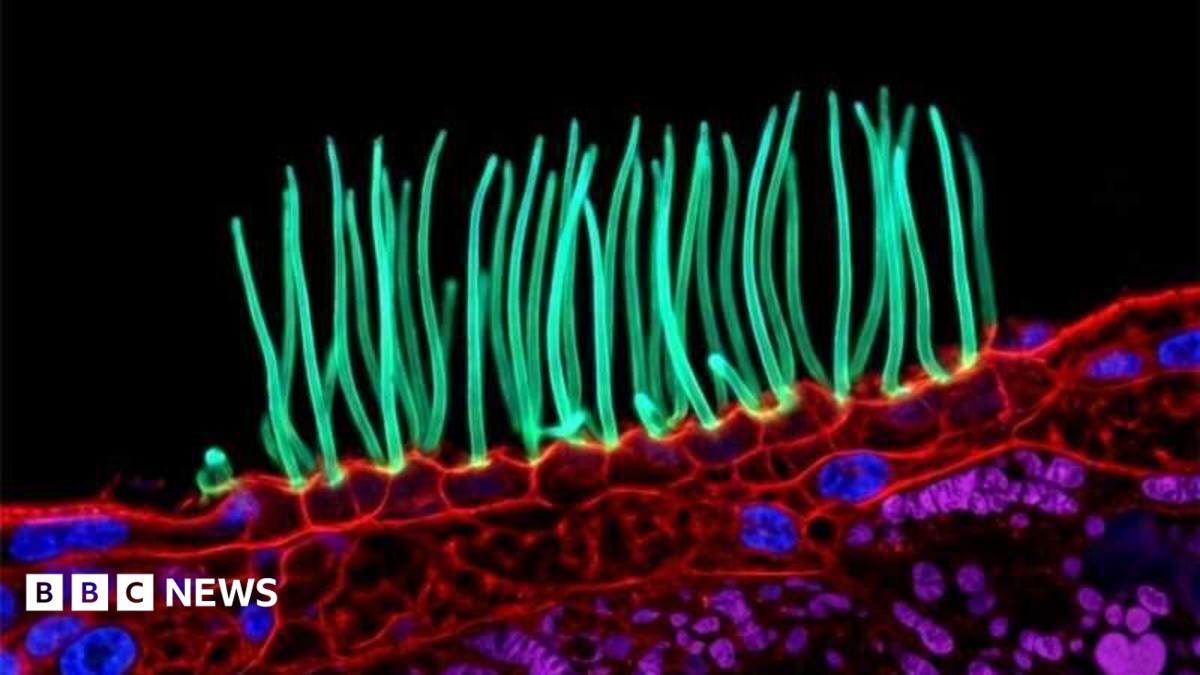
The winner of a prestigious scientific photography competition has been disqualified following concerns raised by other scientists that it was fake.
Nikon said the use of generative AI in the composition of the video broke the rules of its Small World In Motion contest, which accepts photos and video taken using powerful microscopes.
The firm said the video “did not comply with the competition rules regarding generative AI”, but added it was not a judgement of the entrant’s professional reputation or scientific contributions.
It said it would now look at the rules and procedures of the annual contest, which has been running for 15 years and is specifically for microscopic images.
Nikon said it came to the decision “after thoroughly re-evaluating the video and supporting materials and consulting with members of our judging panel”.
The winning entry came from Dr Ning Xu, from Tsinghua University in China, who submitted a short video showing tiny, hair-like structures called cilia moving in the airway of a child with the respiratory condition PCD.
The BBC has approached him for comment.
A number of scientists, including former competition judges, complained to Nikon on its LinkedIn page that the video did not appear to be real.
Xu had acknowledged using AI, but said he believed he had acted within the rules, and had cooperated with Nikon’s investigation.
University of Leicester scientist Dr Robert Hirst, who was among the first experts to voice concerns, said he was “not surprised” and he “knew immediately that the video was fabricated”.
“I have been diagnosing PCD for 20 years by examining their cilia waveform, length, cell size and shape,” he said.
Hirst, who is lead scientist for the NHS centre for PCD diagnosis at the university, said the cells and cilia “look nothing like those from PCD patients”.
“This controversy has impacted a lot of patients, scientists, doctors and PCD support networks around the world,” he said.