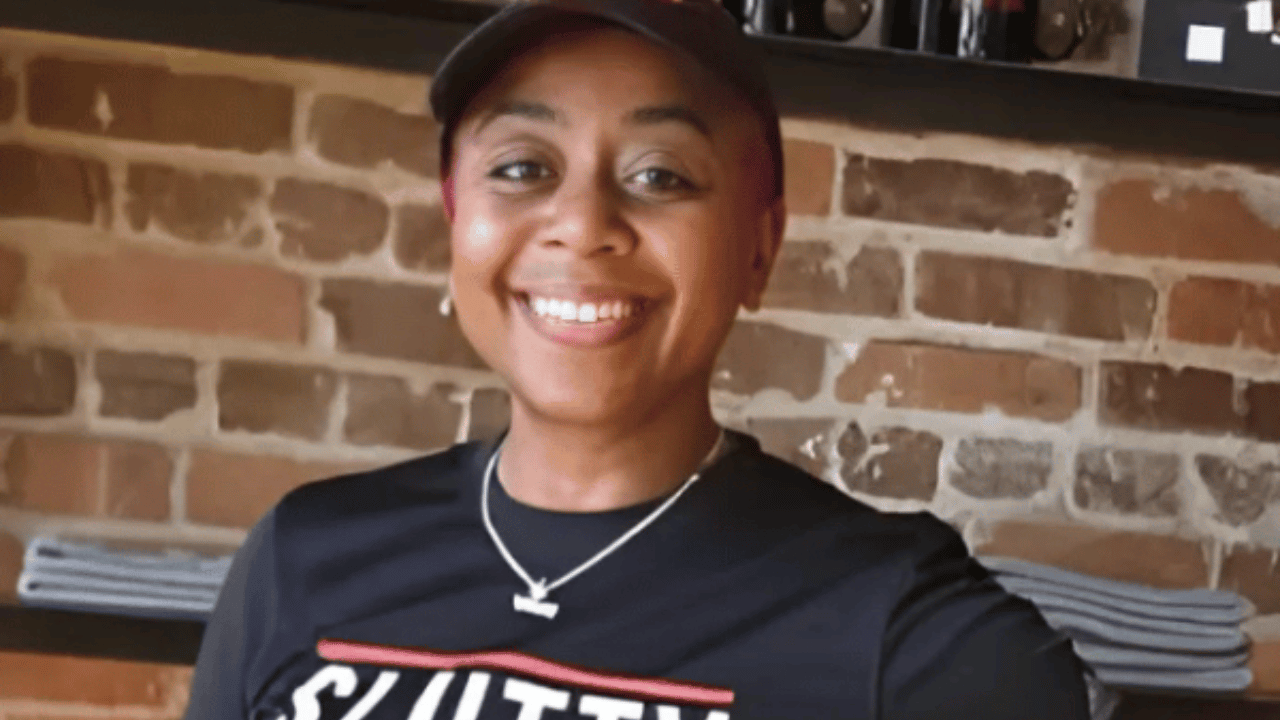

Pinky Cole went from building one of the most celebrated Black-owned restaurant brands in America to fighting to keep her financial empire from falling apart. Behind Slutty Vegan’s celebrity endorsements, sold-out openings, and massive valuation was a business reportedly drowning in debt, mounting expenses, and legal problems that eventually cost Cole control of the company she created.
The Atlanta entrepreneur’s financial troubles have become increasingly public, with bankruptcy filings, unpaid bills, property disputes, and the possibility of foreclosure painting a dramatically different picture from her earlier success.
But how did a business once valued at $100 million end up in such serious financial trouble?
Cole founded Slutty Vegan in 2018 as a ghost kitchen operating from her Atlanta apartment. The concept combined plant-based burgers with provocative menu names, bold marketing, and an experience that appealed to customers well beyond the vegan community.
When she expanded into a food truck and eventually opened her first storefront in 2019, the response was overwhelming. Customers stood in hours-long lines, while celebrities including Snoop Dogg, Usher, and Tyler Perry helped introduce the brand to national audiences.
By 2022, Slutty Vegan had become an investor favorite. Restaurateur Danny Meyer’s Enlightened Hospitality Investments and Richelieu Dennis’ New Voices Fund participated in a $25 million investment that valued the company at approximately $100 million.
However, that valuation represented investors’ assessment of the company’s worth, not cash sitting in Cole’s personal bank account.
The investment fueled an ambitious expansion strategy. Slutty Vegan entered multiple markets, opened locations in New York and other states, and eventually grew to approximately 14 restaurants.
The same expansion that made Slutty Vegan a national sensation also helped create its financial crisis.
Cole later acknowledged that the company expanded faster than its financial infrastructure could comfortably support. Opening restaurants meant taking on construction expenses, staffing costs, rent, equipment purchases, and additional corporate employees.
She also stepped away from daily management while focusing on motherhood and other responsibilities, leaving executives responsible for business operations.
When she returned her attention to the company’s finances, she discovered that corporate spending had grown substantially.
In a 2025 Forbes interview, Cole revealed that Slutty Vegan’s corporate overhead reached $10 million in 2023, despite individual restaurants generating profits.
“In 2023, my corporate overhead was $10 million dollars. I was profitable at the unit level. I did double-digit millions last year in revenue. But when you look at my balance sheet there’s a lot of debt there.”
The distinction was crucial. Slutty Vegan could generate millions in sales while still struggling to cover expenses across the entire company.
Cole also described personally covering approximately $80,000 in weekly payroll during the company’s financial emergency.
Rising construction costs following the pandemic, expensive executive travel, and difficulty securing additional investment reportedly compounded the problem.
By 2024, Slutty Vegan had accumulated approximately $20 million in debt, according to Cole’s public statements.
To reduce expenses, she dismissed members of the company’s executive leadership, sold off a real estate portfolio reportedly valued at $10 million, and scaled back ambitious restaurant openings.
Several locations closed, including restaurants associated with Spelman College, Georgia Tech, and Harlem. Plans for additional locations at Atlanta’s airport and elsewhere were abandoned.
Meanwhile, the company faced lawsuits from former employees alleging unpaid wages and overtime, along with disputes over restaurant rent.
In 2023, workers at Slutty Vegan’s Brooklyn location filed a federal lawsuit alleging compensation violations. Other wage-related litigation involved Cole’s restaurant ventures, while landlords later pursued claims concerning unpaid rent.
These cases created additional legal and financial pressure as the company struggled to stabilize.
By early 2025, Cole could no longer maintain control of the original business structure.
Slutty Vegan entered an Assignment for the Benefit of Creditors, a restructuring process that transferred company assets to an independent administrator to address outstanding debts.
Cole temporarily lost ownership of the business she had spent years building.
In March 2025, she purchased back the brand and certain restaurant assets, launching what she described as Slutty Vegan 2.0. The restructuring did not mean that every financial problem connected to her earlier operations had disappeared.
That became clearer in February 2026 when Cole filed for personal Chapter 11 bankruptcy protection.
Her initial filings identified approximately .2 million owed to the U.S. Small Business Administration for a pandemic-era loan and $192,000 in outstanding Georgia state taxes.
Updated documents later increased her reported personal liabilities to approximately $4 million, including credit card balances, supplier obligations, and other outstanding bills.
The mounting debt also affected Cole’s real estate investments. In March 2026, she successfully challenged a creditor’s seizure of a Loganville rental home, arguing that the action violated protections granted through bankruptcy proceedings.
By October, another Georgia rental property was facing potential foreclosure after mortgage servicer Selene Finance claimed Cole owed more than $164,000 and had missed payments since December 2025. Her attorney disputed the lender’s approach and maintained that the property was already being addressed through her reorganization plan.
Despite those challenges, Cole has continued pursuing a comeback through restaurant franchising, new locations, and her appearance on “The Real Housewives of Atlanta.”
Slutty Vegan remains an operating brand, and Cole’s financial situation should not be confused with a complete shutdown of the business.
Her story illustrates how rapid expansion, costly management decisions, and insufficient cash flow can overwhelm even a nationally recognized company.