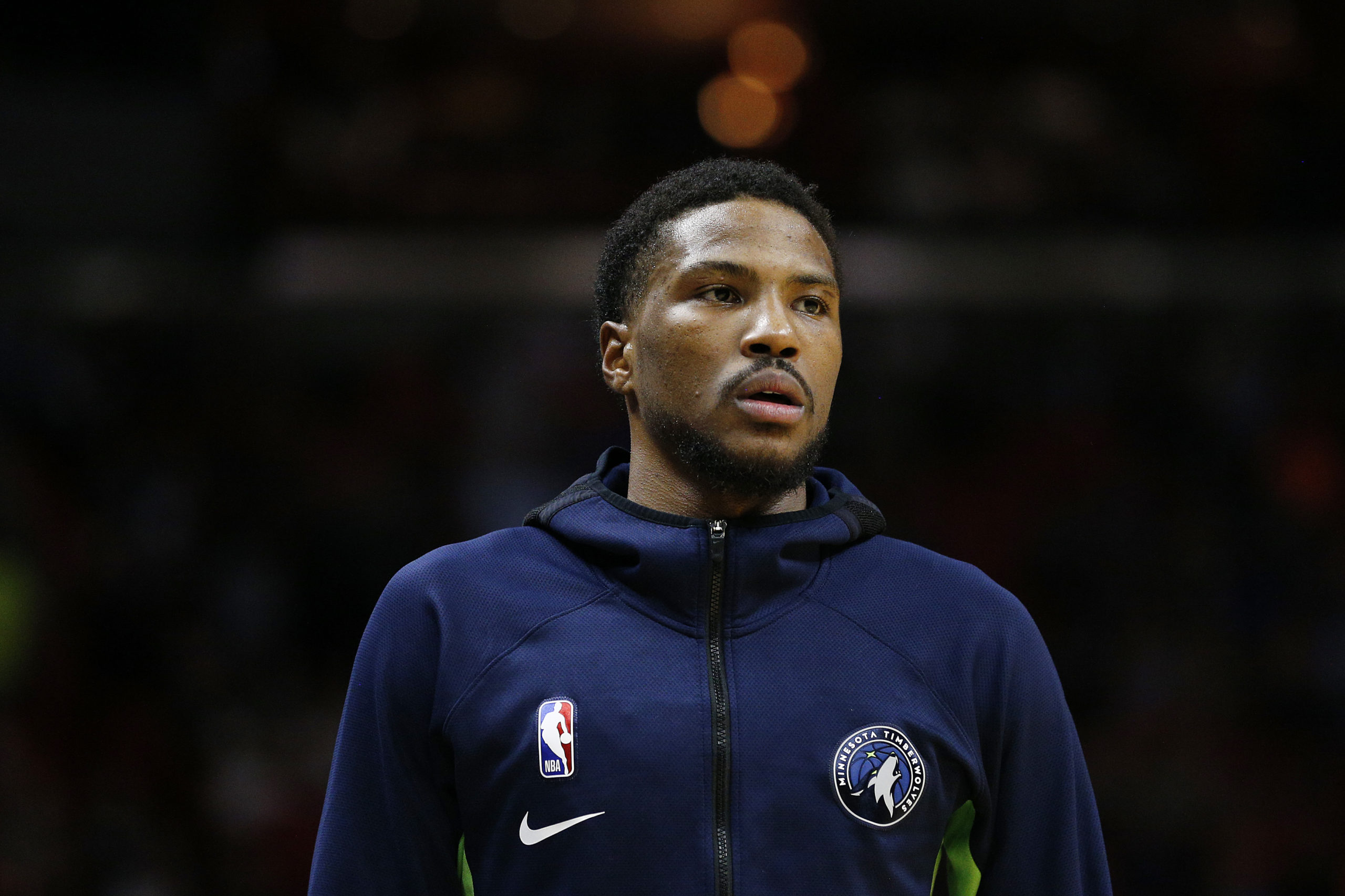
Malik Beasley is expected to plead guilty on December 9, 2026, in a federal bribery and sports betting case involving allegations that he deliberately manipulated his NBA performances to benefit gamblers. The former Milwaukee Bucks and Detroit Pistons guard will appear in federal court in Brooklyn, according to ESPN, which confirmed the upcoming plea through his attorney, Steve Haney.
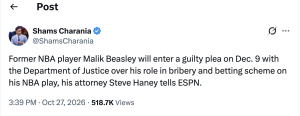
The development marks a major reversal for the 29-year-old, who initially pleaded not guilty to four federal charges in July. His legal team had been negotiating with Department of Justice prosecutors before confirming the December hearing. Although Beasley plans to enter a guilty plea, the specific charges he will admit to and the terms of any agreement have not been publicly disclosed.
Beasley was indicted on June 29, 2026, alongside five other defendants. Federal prosecutors charged him with bribery in sporting contests, conspiracy to commit wire fraud, conspiracy to commit honest services wire fraud, and conspiracy to commit money laundering. The fraud and money laundering conspiracy charges each carry maximum potential sentences of 20 years in federal prison, while the sports bribery charge carries up to five years. His actual sentencing exposure will depend on his plea agreement, the charges involved, and the court’s determination.
According to the Department of Justice, the alleged scheme centered on Beasley’s performances during the 2023–24 NBA season while he played for Milwaukee. Prosecutors accused him of agreeing to intentionally score or rebound above or below expected statistical totals, allowing associates to place informed wagers on individual player performances.
These wagers, commonly called player prop bets, allow gamblers to predict specific statistics rather than the final outcome of a game.
Federal investigators identified at least four Bucks games connected to the alleged operation. Those included matchups against the Cleveland Cavaliers on January 26, the Charlotte Hornets on February 27, the Los Angeles Clippers on March 10, and the Brooklyn Nets on March 21, 2024.
Prosecutors allege Beasley shared advance information about his intended performances with former NBA teammate Ed Davis, who then passed those details to other individuals involved in the betting operation. During the Cleveland game, Beasley allegedly agreed to underperform in rebounding. Ahead of the Charlotte matchup, investigators say he agreed to score fewer points while exceeding expectations in rebounds.
The March 10 Clippers game also became a focus of the investigation. Prosecutors allege Beasley agreed to exceed his rebounding projection, giving associates information they could use when placing bets. Federal authorities say the defendants and their associates collectively wagered hundreds of thousands of dollars across the affected games.
Investigators also described Beasley’s alleged financial motivation. Despite earning nearly $60 million throughout his NBA career, prosecutors say he accumulated millions of dollars in gambling losses. Davis, who previously played alongside Beasley in Minnesota, allegedly loaned him money and became an intermediary between the player and other gamblers.
According to the indictment, Beasley was promised financial benefits in exchange for altering his performances. Those benefits allegedly included having debts he owed Davis reduced or completely eliminated. Prosecutors described the arrangements as bribes intended to influence the outcome of specific statistical wagers.
The case also names William Brown, Robert Gorodetsky, Ernesto Plascencia, and NBA player agent Paolo Zamorano. Each was accused of participating in the broader operation. Davis and Zamorano previously pleaded not guilty, while other defendants have begun moving toward plea agreements.
Beasley’s legal troubles have also damaged his basketball career. Following a strong 2024–25 season with Detroit, he was reportedly discussing a three-year, $42 million contract with the Pistons. Those negotiations collapsed after reports of the federal gambling investigation surfaced in June 2025. The contract was never finalized.
During his final NBA season, Beasley averaged more than 16 points per game and made 319 three-pointers, establishing himself as one of the league’s most productive outside shooters. He has not appeared in an NBA game since Detroit’s 2025 playoff elimination.
The December 9 hearing is now the next major step in Beasley’s criminal case. No sentence has been announced, and a planned guilty plea does not establish the outcome of every allegation in the indictment. The federal court will determine which charges are resolved through his plea and what punishment, if any, follows.