HaloBraid, a hair-braiding device developed by engineer Yinka Ogunbiyi, is getting fresh attention after a new demonstration showed how the technology could help professional stylists complete braids faster and potentially cut salon appointments in half.
Video
The device is designed to handle one of the most time-consuming parts of braiding while leaving hairstylists in control of the actual hairstyle. Instead of replacing braiders, HaloBraid works alongside them, completing the repetitive weaving that can turn a routine hair appointment into an all-day commitment.
For anyone who has spent six, eight, or even 10 hours getting box braids or knotless braids installed, the appeal is easy to understand. The company says its technology can complete individual braids up to five times faster than traditional hand braiding.
But how does it actually work?
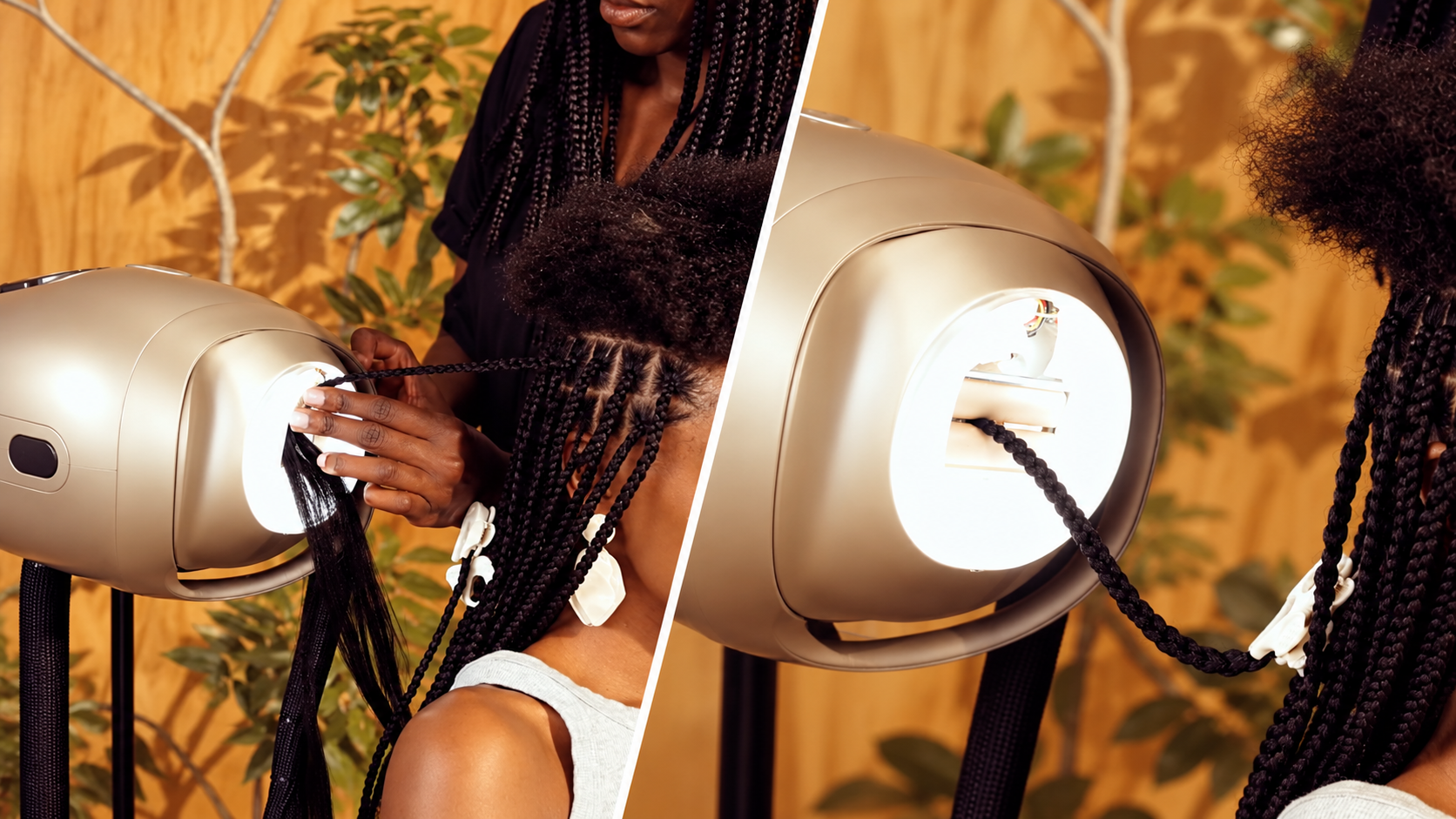
The HaloBraid device attaches to a salon chair and assists a stylist after the initial braid has already been created by hand. The hairstylist begins by sectioning the client’s hair, determining the braid size, preparing any extensions, and starting the braid near the scalp.
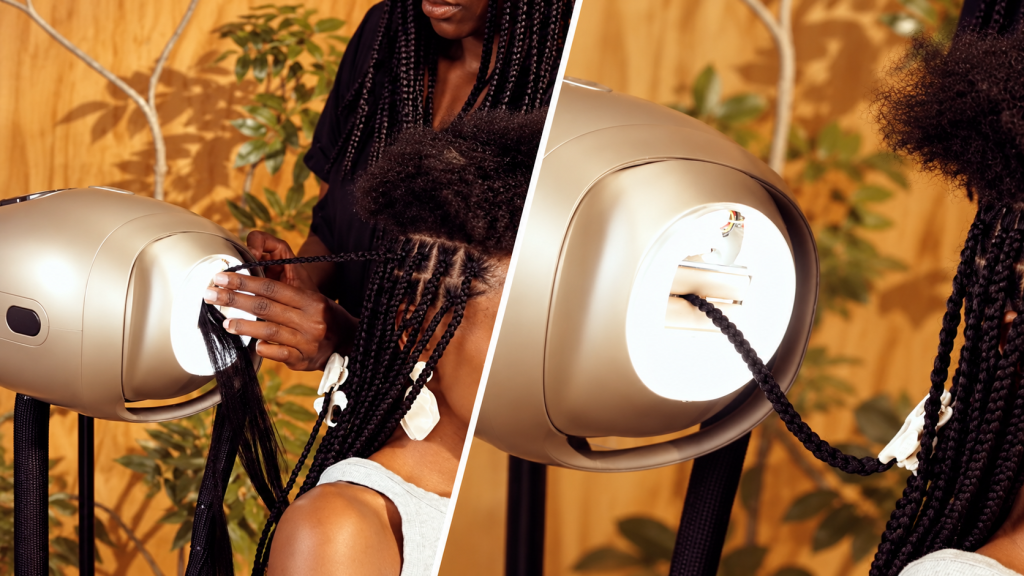
Once the braid has been established and the necessary extensions are incorporated, the stylist guides the hair into the device’s braiding portal.
According to the company, HaloBraid uses air to lift the hair into specialized braiding channels. Its automated mechanism then continues the three-strand weaving pattern, following the size and structure established by the stylist.
The completed braid is released without the pulling or tugging typically associated with mechanical hair manipulation, according to HaloBraid. The stylist remains responsible for any additional finishing or sealing required by the hairstyle.
That division of work is intentional. The device cannot independently part hair, install extensions, create intricate cornrows, or perform detailed braiding directly against the scalp.
Its primary function is finishing the lengths of individual braids, including those used in box braid and knotless braid styles.
For professional stylists, the potential benefits extend well beyond completing appointments faster.
Braiding requires thousands of repeated finger, hand, and wrist movements during a full appointment. Professionals who spend years performing these movements may experience muscle fatigue, discomfort, and repetitive strain injuries.
Conditions such as carpal tunnel syndrome can affect people whose work involves prolonged or repetitive hand activity, although individual risk depends on several factors.
By automating the repetitive finishing process, HaloBraid could reduce the amount of continuous handwork required during a styling session.
That could allow braiders to conserve energy for the detailed portions of their work, including precise parting, maintaining appropriate tension, and creating customized styles.
There is also a potential financial advantage.
A stylist who ordinarily spends six hours completing one appointment might be able to serve additional clients if HaloBraid reduces that service to approximately three hours.
Alternatively, stylists could maintain their existing appointment schedules while spending fewer hours working.
For independent braiders who operate their own businesses, that flexibility could create more opportunities to manage bookings, reduce physical exhaustion, or make room for personal responsibilities.
However, higher income is not guaranteed. Earnings would depend on demand, appointment prices, time saved, and the fees associated with using the device.
HaloBraid is introducing the technology through a professional partnership model rather than requiring stylists to purchase the machine outright.
Participating salons and braiders will pay a fee based on appointments where the technology is used. The company has not publicly disclosed its full pricing structure.
For clients, the biggest potential benefit is getting their time back.
A traditional appointment involving long or small braids can consume most of the day, especially when a stylist works alone.
HaloBraid’s advertised goal of reducing appointment times by approximately half could make braided hairstyles easier to fit around work schedules, school, childcare, and other responsibilities.
Shorter appointments may also benefit clients who experience discomfort from remaining seated in one position for extended periods.
The company’s air-assisted process is designed to minimize pulling and tension while maintaining consistent braid formation. However, the comfort and safety of a finished hairstyle still depend on proper installation, including how tightly the stylist braids near the scalp.
The device could also make routine braid maintenance more convenient. Clients who postpone appointments because of the time commitment may find it easier to schedule their next style if the process becomes significantly shorter.
For Ogunbiyi, the invention came from firsthand frustration.
During the COVID-19 lockdown, she attempted to braid her own hair and discovered how physically demanding and repetitive the process could be. The experience reportedly took four days and inspired her to approach braiding as an engineering problem.
Her background in engineering helped shape a development process that included more than 600 prototypes and feedback from professional braiders.
The result is a technology intended to support an existing beauty profession rather than eliminate the human expertise behind it.
The business has also attracted major financial backing.
In June 2026, Halo announced a $7 million seed funding round led by Seven Seven Six, the venture capital firm founded by Reddit co-founder Alexis Ohanian, who is married to tennis legend Serena Williams.
AlleyCorp and Bling Capital also participated in the investment.
The funding is intended to support continued product development, manufacturing preparation, stylist testing, and salon partnerships.
The company is introducing HaloBraid through a phased rollout involving selected professional stylists and salons. It is not currently marketed as an at-home device for consumers.