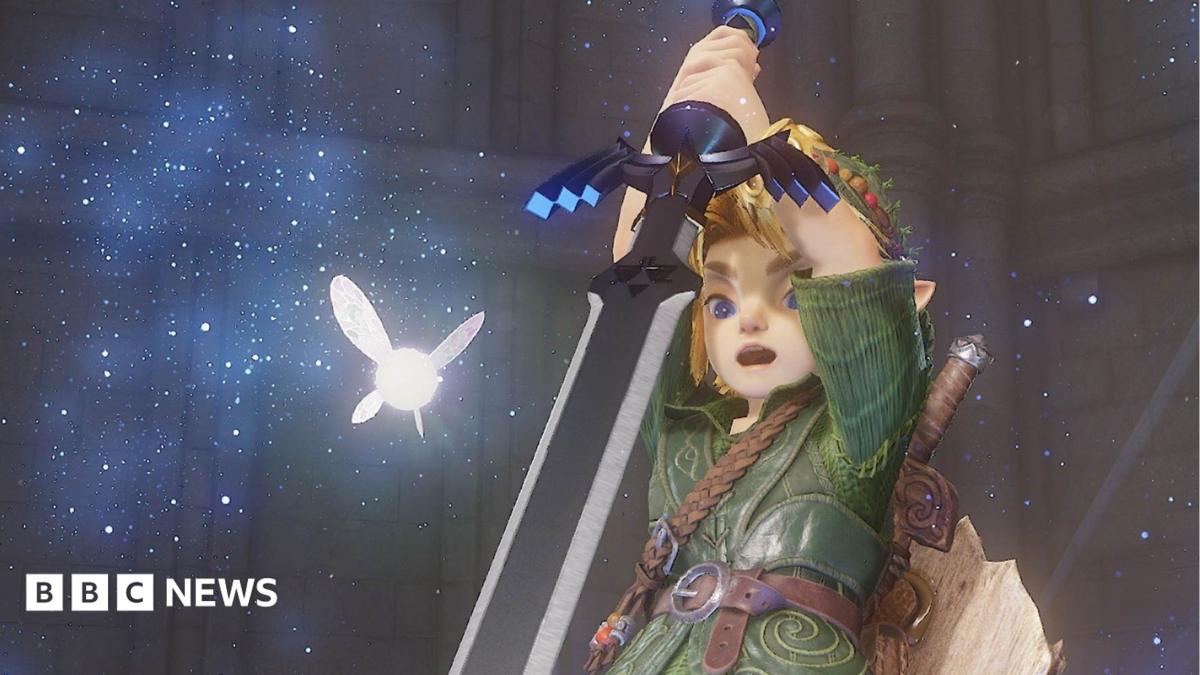
This is the power of nostalgia – and a perfect example of how video games can trigger it. Doran now teaches an esports course at Rowan University in New Jersey. She says the original Ocarina of Time, released in 1998, had a “magical” quality that she hopes to rediscover, and also share with her sister’s children.
The video games industry has long leaned on remakes. From Mario Kart to the Final Fantasy series, or even Pac-Man, some games just keep coming back in updated forms, as new generations of gamers emerge and as computer hardware improves, enabling more detailed graphics and increasingly expansive game worlds.
While the emotional hook may be the most significant draw, putting out a remake can be a double-edged sword. Some gamers are very protective of their favourite titles and new versions don’t always meet certain fans’ astronomically high expectations.
Nostalgia is an important but mixed emotion, says Tim Wulf, at the Centre of Advanced Internet Studies in Bochum, Germany. It has positive aspects but also a kind of sadness, too. Happiness in remembering things that were important to us, and also an awareness that that time is now gone.
“It’s a social emotion because memories that induce nostalgia for us are connected to other people,” he explains, adding that nostalgia can boost our self-esteem while highlighting key social bonds.
Video games, says Wulf, are notoriously good at triggering nostalgia because gamers can “jump into the same environment”. In other words, games are like time machines for our emotions, and returning to fondly remembered places can feel stabilising or reassuring in an ever-changing world.
Doran, for one, notes that when you return to a favourite old game, there’s something satisfying about deploying previously learned skills. You know what to do here, you’re winning again. Just like the old days.