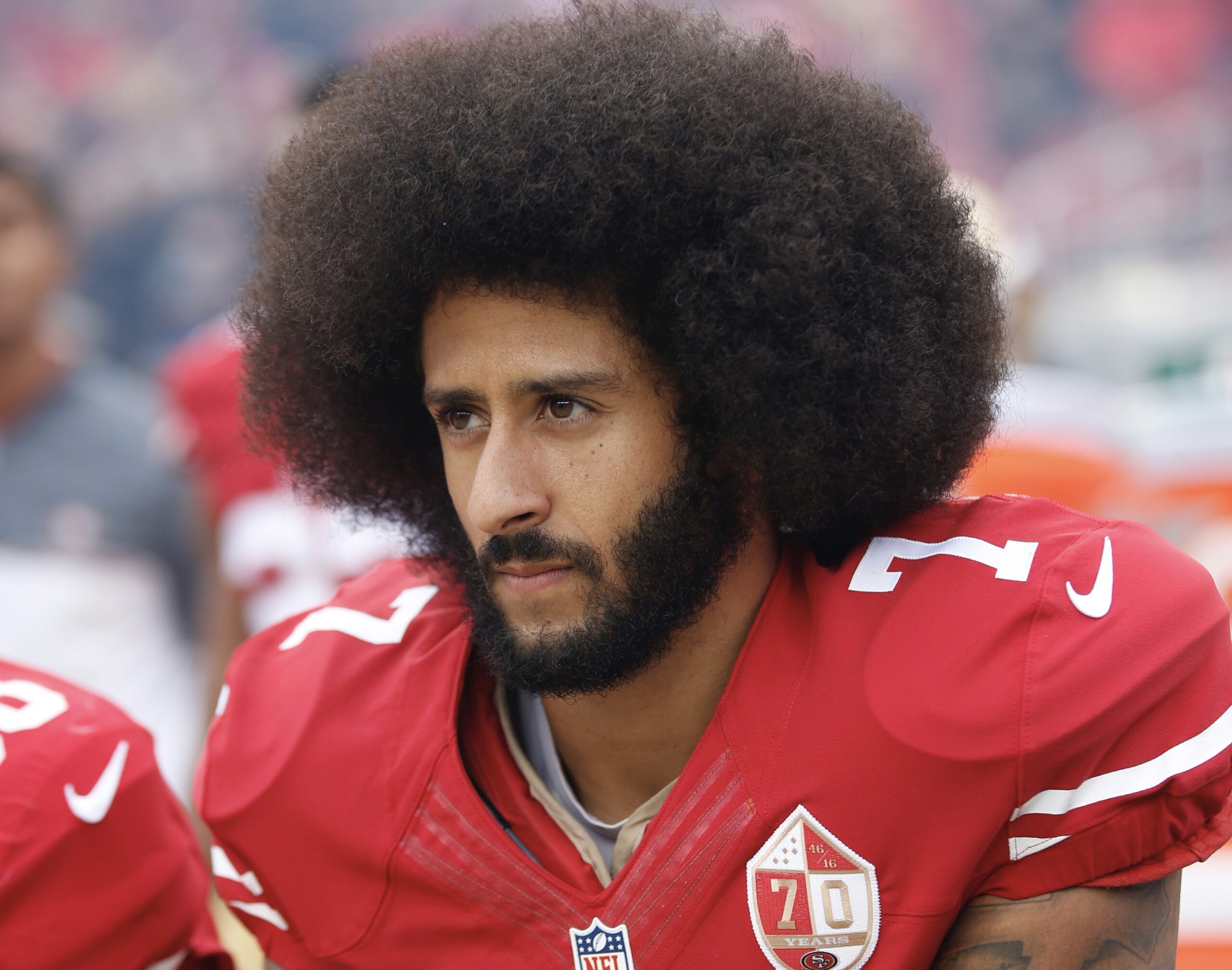
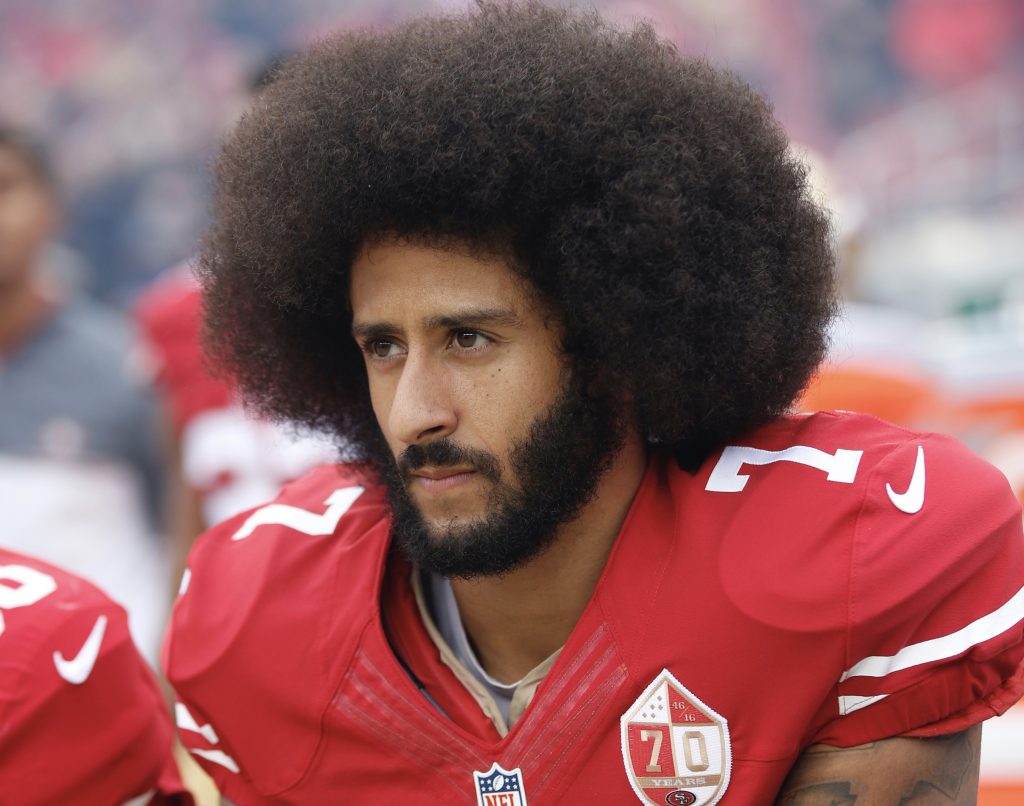
Colin Kaepernick says the fight surrounding Macklemore’s removal from Ed Sheeran’s tour looks less like a one-time controversy and more like a familiar warning about what can happen when powerful owners decide a protest has become bad for business.
Video
During an interview with MeidasTouch, Kaepernick connected Macklemore’s situation directly to the battle he fought with the NFL after protesting racial injustice and police brutality during the 2016 season.
“What Robert Kraft and what they’re saying by denying Macklemore the opportunity to go out and perform with Ed Sheeran is that they are willing to collude,” Kaepernick said. “They are openly colluding.”
His comments came after Macklemore was removed from the remaining dates of Sheeran’s U.S. Loop Tour following his public support for Palestinians. Macklemore said several venues would not permit shows featuring him after he declared “Free Palestine” while performing at MetLife Stadium in New Jersey and introduced his protest song “Hind’s Hall.”
Macklemore accused New England Patriots owner Robert Kraft, whose Kraft Group owns Gillette Stadium, of helping rally opposition among stadium owners. Kraft confirmed that Macklemore would not perform at Gillette Stadium, but described the decision differently. Kraft pointed to Macklemore’s recent statements and what he called “a broader history of antisemitic rhetoric and imagery.”
Kraft also said the decision was not intended to dismiss Palestinian suffering or prevent people from advocating for Palestinians. Macklemore has denied being antisemitic and has argued that criticism of the Israeli government should not automatically be treated as hostility toward Jewish people, according to Reuters.
The dispute quickly grew beyond Macklemore. Finneas, Lukas Graham, Aaron Rowe and members of Sheeran’s touring band Beoga withdrew from upcoming appearances in solidarity. Sheeran said Macklemore’s removal was the promoter’s decision and maintained that venue owners had threatened to block concerts if Macklemore remained on the bill.
For Colin Kaepernick, however, the bigger story is the amount of power concentrated in the hands of owners and institutions that control access to major platforms.
“They also want people to know that if you take an action that they don’t agree with, they will come for you,” Kaepernick said. “They will organize against you, which means that we collectively have to organize to be able to protect our interests as well.”
That argument has followed Kaepernick for nearly a decade.
Kaepernick began protesting during the national anthem in 2016 to call attention to police violence and racial inequality. After his final season with the San Francisco 49ers, he became a free agent in 2017 and was not signed by another team.
In October 2017, Kaepernick filed a grievance under the NFL’s collective bargaining agreement alleging that league owners had worked together to prevent him from being employed because of his advocacy. The complaint accused the NFL and its owners of colluding to deprive him of employment in retaliation for his social justice work.
The NFL disputed the collusion allegation.
The case did not immediately disappear. In August 2018, an arbitrator rejected the NFL’s attempt to have Kaepernick’s grievance dismissed, allowing the case to continue toward a hearing, according to The Washington Post. That ruling did not establish that collusion had occurred, but it allowed Kaepernick to continue pursuing the claim.
Kaepernick and former teammate Eric Reid ultimately reached a confidential settlement with the NFL in February 2019. The agreement ended their grievances without a public ruling on whether the league had colluded, and the financial terms were not disclosed.
His criticism of the league continued after the settlement.
In 2020, as the NFL publicly embraced more social justice messaging following nationwide protests over racial injustice and police violence, Kaepernick challenged the league’s response. The Washington Post reported that he characterized the NFL’s messaging as “propaganda” while accusing the league of continuing to blackball Reid, who had protested alongside him.
Six years later, Kaepernick was still making a similar argument about his own career. In a September 2026 interview, he said he no longer watches the NFL because he believes the organization is still blackballing him and has targeted other players connected to the protest movement. The NFL has long disputed claims that teams collectively kept Kaepernick out of the league because of his activism.
Kaepernick has also described subtler forms of pressure surrounding player protests. In a 2026 interview with The New Yorker, he recalled players telling him they had spoken with agents or family members before deciding whether to protest. He also recounted one player telling him that an owner had instructed him not to participate. Kaepernick described receiving pressure himself that he said was often framed as suggestions that he consider another approach rather than direct orders to stop.
That history helps explain why he views Macklemore’s situation through a much wider lens than one rapper, one tour or one stadium.
Music industry professionals describe venue owners as typically quiet participants in major tours, but owners retain significant influence because they control access to their properties. Promoters manage much of the financial and logistical machinery behind tours, while superstar artists generally carry substantial creative influence. The Macklemore controversy has exposed how quickly that balance can change when a venue owner decides to exercise that authority.
For Kaepernick, the underlying question has remained remarkably consistent since 2016: What happens when speaking publicly about injustice collides with institutions that control jobs, stages, contracts and money?
“They want to protect their interests,” Kaepernick said. “They want to protect their power. They want to protect their money.”
Whether discussing an NFL roster spot or a stadium concert, Colin Kaepernick has spent years arguing that protest carries a different level of risk when the people being challenged also control access to the platform. Macklemore’s removal has now given him another example to point toward, nearly a decade after his own protest turned that same debate into one of the defining controversies in modern sports.