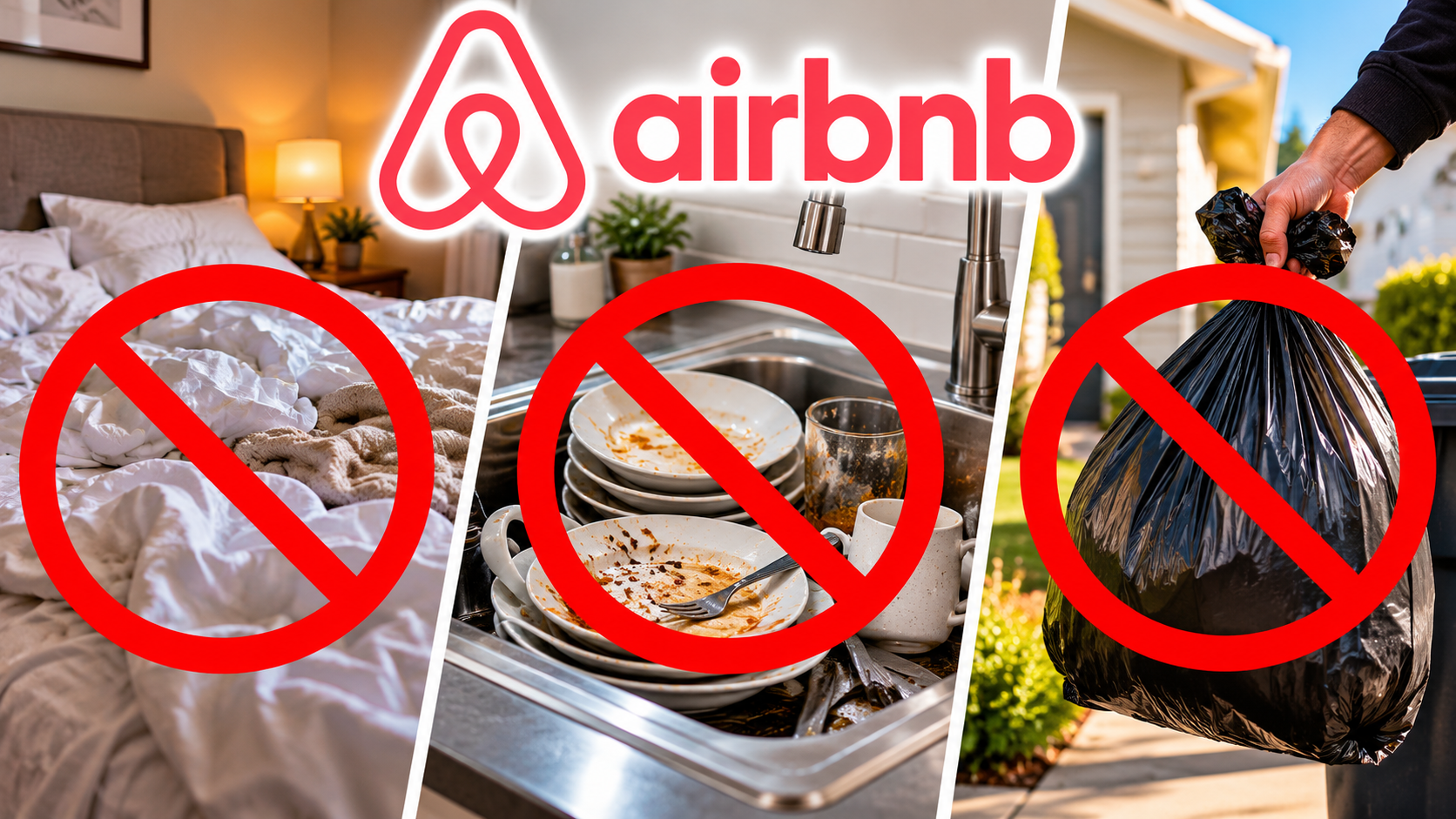
Airbnb is putting an end to some of the most frustrating checkout demands guests face when renting a vacation home. The company has announced a new policy preventing hosts from requiring visitors to strip beds, wash and put away dishes, start laundry, or transport garbage offsite before leaving. Hosts will also be prohibited from imposing their own fines or penalties on guests.
The updated Airbnb checkout rules will apply to reservations booked on or after November 20, 2026. According to Airbnb’s newly published community policy, hosts can still establish expectations for their properties, but those instructions must be reasonable, clearly disclosed before booking, and consistent with the platform’s guidelines.
For travelers who have encountered lengthy cleaning instructions at the end of a vacation, the changes establish clearer boundaries between being a respectful guest and taking on responsibilities normally handled by cleaning staff.
Airbnb’s policy specifically prohibits hosts from asking guests to complete tasks that require “significant effort or time, or would typically be performed by a cleaner.”
That includes removing sheets from beds, washing dishes and returning them to cabinets, starting loads of laundry, and transporting trash away from the property. These restrictions address checkout demands that have frustrated travelers, particularly when a rental already includes a separate cleaning fee.
However, the new Airbnb checkout rules do not eliminate basic expectations for cleanliness. According to the company’s October 20 announcement for hosts, property owners may still ask guests to place dirty dishes in the sink, gather used towels, and separate garbage and recycling into designated indoor containers.
Hosts can also request that guests turn off appliances, switch off air conditioning before departing, return keys, and secure the property. Airbnb says these requests fall within the type of reasonable responsibilities travelers can handle without performing extensive cleaning.
The company is also making changes to how house rules appear during the booking process. Rather than allowing hosts to introduce additional requirements through messages, signs inside the property, or verbal instructions after a reservation has been confirmed, Airbnb will require all house rules and requests to appear in a designated section of the listing before guests book.
Under the updated system, hosts can establish seven standardized house rules covering maximum overnight guests, quiet hours, events, pets, smoking, commercial photography, and locking up at checkout.
Airbnb says the information will also appear more prominently in guests’ Trips tabs and reservation reminders, reducing the likelihood of travelers discovering unexpected instructions shortly before leaving.
In a statement provided to Euronews Travel, Airbnb acknowledged hearing from its community that house rules can be “confusing, onerous and hard to manage.”
The company explained that its updated approach is designed to make expectations easier for guests to understand while limiting unreasonable demands from hosts.
Another significant part of the Airbnb checkout rules involves financial penalties. According to Airbnb’s official policy, property owners will no longer be permitted to impose their own fines or other penalties on guests.
That means hosts cannot create independent financial punishments simply because a visitor did not complete a particular checkout chore.
The restriction does not mean travelers can damage a property without consequences. Airbnb’s guest policies still require visitors to leave accommodations in a condition that does not require excessive cleaning. Guests may also be responsible for damage, missing belongings, or unexpected cleaning expenses.
Airbnb states that standard cleaning fees are intended to cover routine work between reservations, including laundry and vacuuming. Property owners are not permitted to charge additional guest fees for failing to complete specific cleaning or checkout tasks.
Hosts who experience legitimate property damage can pursue reimbursement through Airbnb’s established procedures. The company also provides host damage protection through AirCover, subject to its eligibility requirements and coverage limitations.
There is another exception involving fines imposed by outside authorities. Airbnb says hosts may notify guests about potential penalties from local governments, homeowners associations, or building security. However, the possibility of those penalties must be disclosed in the appropriate listing section.
The updated policy also addresses access to amenities. Hosts generally cannot advertise features such as air conditioning and then instruct guests not to use them. Airbnb says any mandatory fees for advertised amenities must already be included in the price presented during booking, although hosts may separately disclose charges for optional services.
While the Airbnb checkout rules establish broader protections for travelers, Airbnb recognizes that some properties have unusual requirements.
For example, hosts in areas with wildlife may be permitted to ask visitors to dispose of garbage in animal-proof containers. Properties affected by drought restrictions may also have legitimate reasons to request shorter showers or reduced water usage.
According to Airbnb’s hosting guidance, the company will evaluate those situations based on the property’s location, the type of accommodation, and other relevant circumstances rather than automatically rejecting every unusual request.
Airbnb is also establishing consequences for hosts who ignore the updated requirements. The company says it may initially provide guidance, request corrections, or issue warnings when it identifies rules that violate its policy.
Unresolved violations could result in notices appearing on listings, including alerts that a property contains cleaning requests. Hosts may also experience reduced visibility in search results or face additional enforcement measures.
Airbnb says hosts will receive information about problematic requests and have an opportunity to appeal certain decisions.
The changes do not remove a guest’s obligation to follow legitimate house rules. Airbnb’s guest standards still require travelers to respect occupancy limits, smoking restrictions, quiet hours, and other established conditions. Repeated or severe violations can result in account consequences.
For guests, the biggest change is a clearer separation between ordinary courtesy and cleaning work. A traveler may still be expected to dispose of trash properly and leave a rental in reasonable condition, but hosts generally cannot require an extensive cleaning routine before checkout.
The new policy applies based on when the reservation is booked, meaning a stay reserved before November 20, 2026, is not automatically covered by the updated requirements simply because the trip takes place afterward.