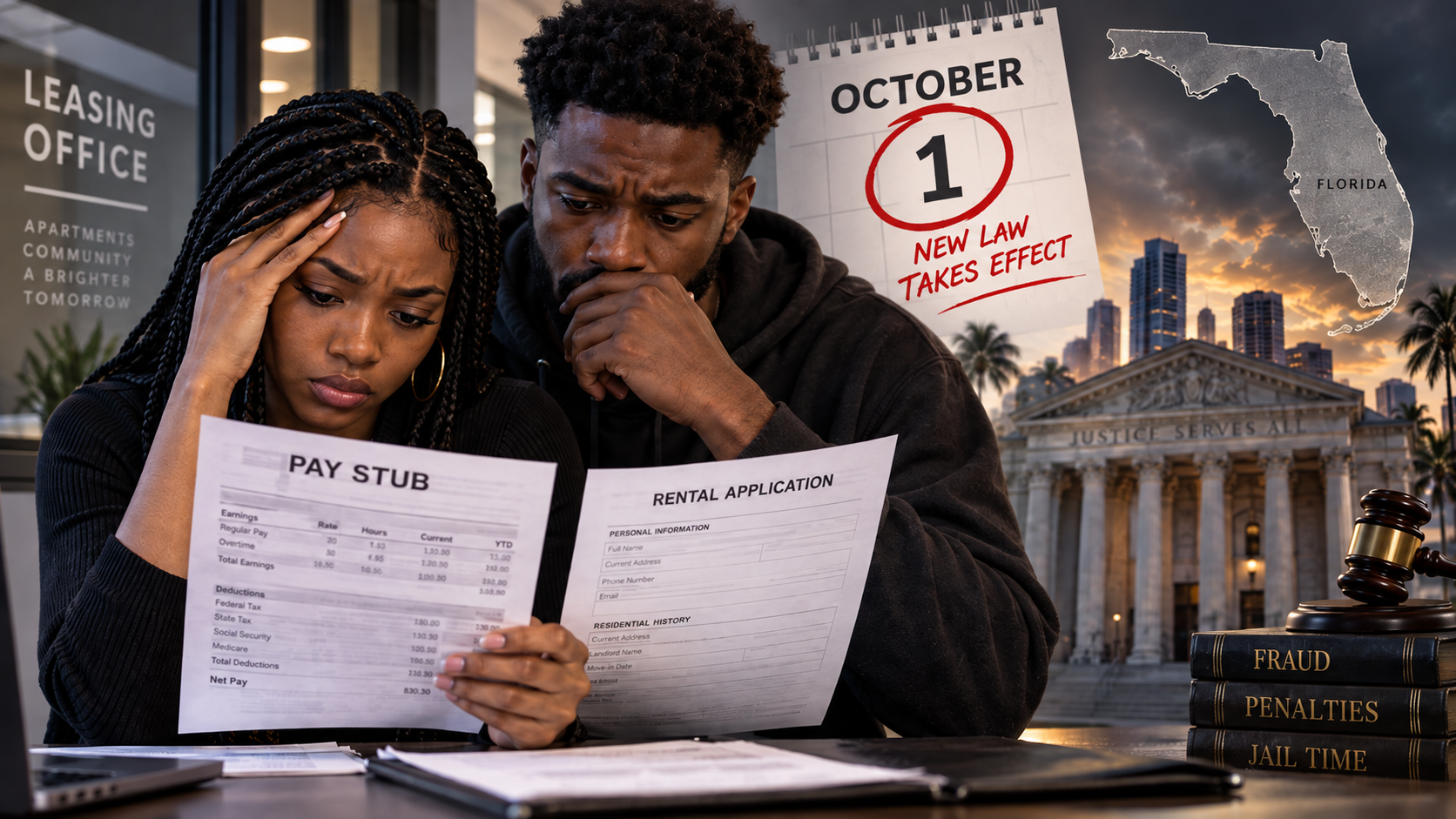
Renting an apartment in Florida with a fake ID, forged pay stubs, or someone else’s name on the application is now a felony under a new Florida rental fraud law that takes effect October 1. The law, HB 1293, creates a brand new crime called fraudulent entry of a residential dwelling unit. It targets people who use fake documents or false identity information to get approved for a lease, and it comes after years of landlords across the state reporting the same pattern of doctored paperwork showing up in rental applications.
Under the Florida rental fraud law, a person breaks the statute by knowingly and willfully doing one of three things to get possession of a rental unit. The first is putting a materially false statement about their identity in writing on a rental application. The second is handing a landlord forged, fictitious, or counterfeit documents, which the law specifically names as things like a fake driver’s license, a doctored bank statement, or forged pay stubs. The third is impersonating the actual person whose name is on the application in order to sign the lease or take the keys. Any one of those three actions is now enough on its own to trigger criminal charges.
The charge itself is a third-degree felony, which in Florida carries up to five years in prison and a $5,000 fine. That is the same severity level given to crimes like grand theft, which puts rental paperwork fraud in a category most people would not expect it to land in. Under this Florida rental fraud law, faking a pay stub to clear a landlord’s income requirement is no longer just a lease problem that gets sorted out with an eviction notice. It is a criminal record.
What makes the law hit even harder is what it does to the eviction process itself. Normally, when a tenant violates a lease, Florida law requires the landlord to issue a notice to cure, which gives the tenant a chance to fix the problem, like paying overdue rent, before losing the unit. HB 1293 removes that chance completely for fraud cases. The law specifically states that fraudulent entry is noncurable, and it does not matter whether criminal charges have even been filed yet. The moment a landlord identifies the fraud, they can issue a 7-day notice to vacate. There is no cure period, no second attempt to make it right, and no requirement to wait on a criminal case before acting.
Lawmakers moved fast and nearly unanimously on this Florida rental fraud law. The bill was filed by Representative Greco, with co-introducers Fabricio and Salzman, and it had a companion bill in the Senate from Rodriguez. It passed the Senate 34 to 0, and the House 110 to 0 before Governor Ron DeSantis signed it into law on June 12. A vote margin like that does not happen often in Tallahassee, and it signals just how widely lawmakers agreed the problem needed fixing.
Part of what pushed the bill through was pressure from the Florida Apartment Association, which represents landlords and property managers statewide. The organization said Florida held “the dubious distinction of leading the nation in incidents of rental application fraud,” and its members reported the issue was hitting their properties directly. That advocacy is part of why Florida is now the first state in the country to create a law that specifically criminalizes rental application fraud, rather than leaving it to general fraud or forgery statutes already on the books.
For renters, the takeaway is simple. The workaround tactics some people have leaned on for years, like borrowing someone else’s pay stub, adjusting numbers on a bank statement, or using a friend’s clean credit and identity to get approved, are no longer sitting in a gray area. They are now specifically named in Florida rental fraud law as felony conduct. And because the violation is noncurable, getting caught does not just mean losing the apartment. It can mean losing it within a week, with a felony charge attached, regardless of whether rent was ever late or the tenant was otherwise reliable.
Florida’s rental market has stayed tight for years, and the pressure to get approved for a unit has pushed some renters toward exactly the kind of shortcuts this law now targets. Anyone currently renting, or about to apply for a new lease, should know the rules have changed. Starting October 1, the paperwork used to get into a Florida rental carries the same legal weight as the lease itself.