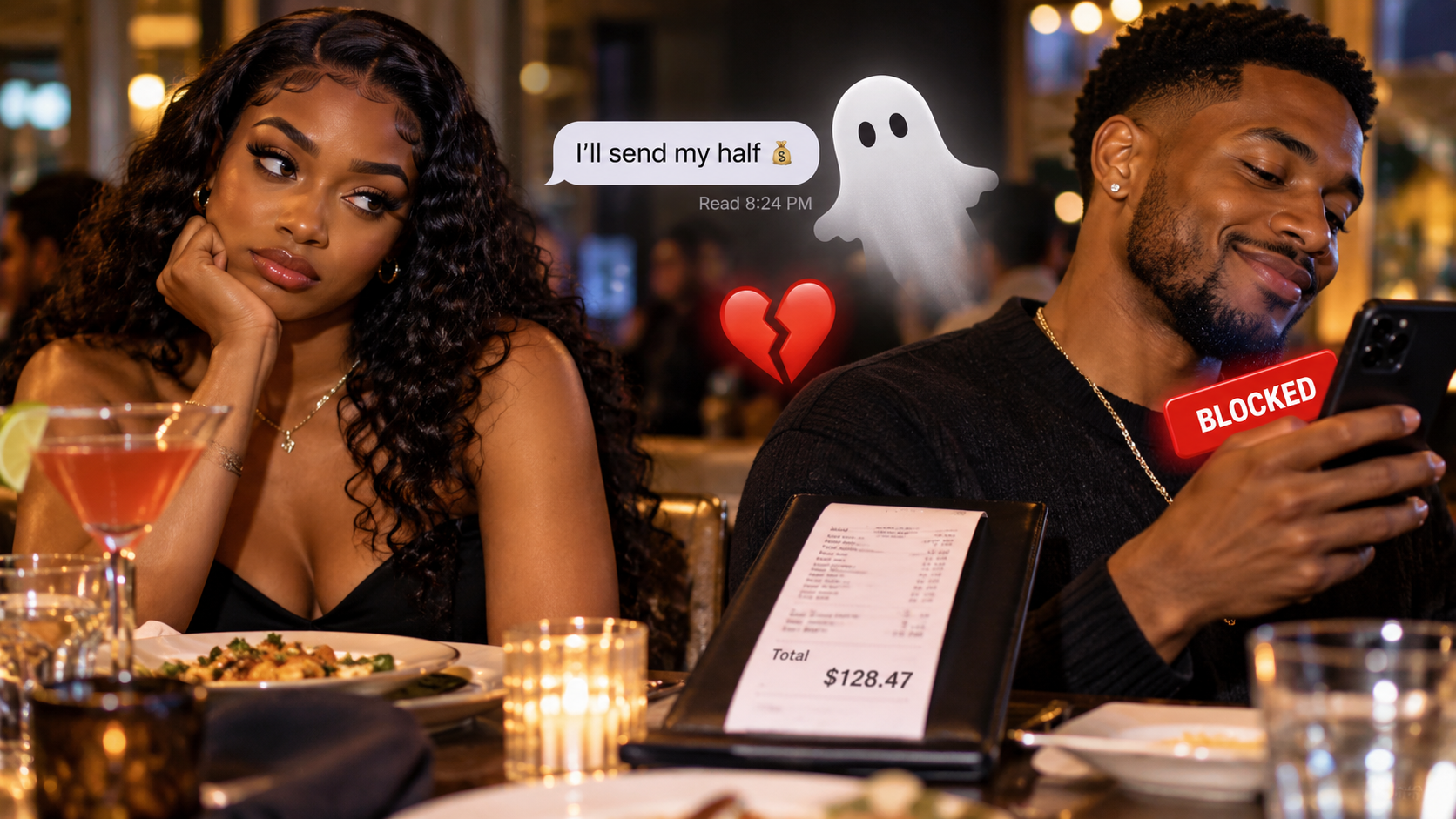
Getting ghosted after a date already stings, but finding out your date disappeared while still owing you money adds a whole different level of disrespect. New research suggests Gen Z dating costs are becoming enough of a problem that some young daters are choosing the block button instead of settling the bill. According to Zelle’s New Economics of Dating Report, 52% of Gen Z respondents said they have ghosted, blocked, or unfollowed someone at least once to avoid paying them back after a date.
The research surveyed 1,800 Gen Z and millennial Americans who had dated within the previous year. Zelle said Accelerant Research conducted the 10-minute online survey in August 2026 in partnership with Early Warning Services, the company that operates Zelle.
The disappearing act appears to be part of a much bigger money problem.
According to Zelle, 84% of Gen Z and millennial daters said rising costs have affected their dating lives. About 32% said they are going on fewer dates, while 11% said they have stopped dating because they could not afford it.
For Gen Z specifically, one in five respondents said they have gone into debt to maintain a lifestyle with someone they were dating. Across Gen Z and millennials, 17% said they have taken on debt for that reason, while a similar percentage said they have asked friends or relatives for money for a date.
In other words, dinner and drinks can hit differently when rent, groceries, transportation, and everything else are already competing for the same paycheck.
“Dating has always come with unspoken rules, but rising costs are forcing a rewrite,” Zelle general manager Denise Leonhard said in the company’s announcement. “Financial compatibility is becoming part of the chemistry test. The new flex isn’t running up the tab; it’s reading the room, respecting the budget and showing thought.”
The numbers suggest plenty of young daters agree.
Zelle found that 53% of Gen Z respondents said financial compatibility has mattered more than romantic chemistry when deciding whether to continue seeing someone. Across both generations surveyed, 24% said they have decided against pursuing someone because they were not financially compatible.
Cheap dates are not necessarily the problem either. The survey found that 38% viewed someone more positively for planning an affordable and thoughtful date, compared with 23% who said the same about an extravagant outing.
Still, deciding who pays remains awkward.
According to Zelle, 25% of respondents reported anxiety about asking who would pay, while 26% said they would not bring up payment with their date at all. More than half, 57%, have used a person-to-person payment service such as Zelle to settle expenses during or after a date. That number climbed to 64% among Gen Z.
That is where Gen Z dating costs collide with another modern dating habit: avoiding uncomfortable conversations.
Licensed mental health counselor and financial therapist Aja Evans told USA TODAY that being ghosted over an unpaid date can create problems for the person who covered the check.
“If you’re thinking about the person who was ghosted and maybe paid for the date, they may have only been able to pay for their half of the portion,” Evans said.
Her recommendation is to get clear about the money before the check lands on the table.
“Don’t go on dates if you feel like you can’t afford them,” Evans said. “If you can’t potentially afford to split if somebody is going to ask you to split, or you have that expectation that they are going to pay for it, name that before.”
The financial pressure showing up in dating appears consistent with broader research into Gen Z’s wallets.
A May 2026 Bank of America Better Money Habits study found that 42% of Gen Z adults surveyed were living paycheck to paycheck, while 49% identified the high cost of living as a major obstacle to financial success. The study surveyed 1,133 Gen Z adults ages 18 through 29 as part of a larger national survey conducted by Ipsos.
Dating was already taking a hit. Bank of America found 51% of Gen Z respondents spent nothing on romantic dates in a typical month, while 24% said their financial circumstances were causing them to delay moving relationships forward. Meanwhile, 74% said financial responsibility was important in a partner, and 43% viewed irresponsible spending as a dealbreaker.
The generation is also becoming more comfortable saying when something simply is not in the budget. Bank of America reported that 42% practice “loud budgeting,” meaning they openly tell friends what outings they can and cannot afford. Another 75% said they actively look for ways to save money while making social plans.
KTLA consumer reporter David Lazarus suggested inexpensive alternatives such as grabbing coffee, hiking, or walking on the beach. He also recommended establishing who will pay before the date instead of waiting for an awkward moment when the check arrives.
That might be the biggest takeaway from the latest Gen Z dating costs conversation. The generation is not necessarily demanding five-star restaurants, luxury gifts, and expensive nights out. Zelle’s own data shows affordable thoughtfulness can score higher than extravagance.
But if the plan is to split the bill, disappearing with an unpaid balance is probably not the financial compatibility anyone had in mind.