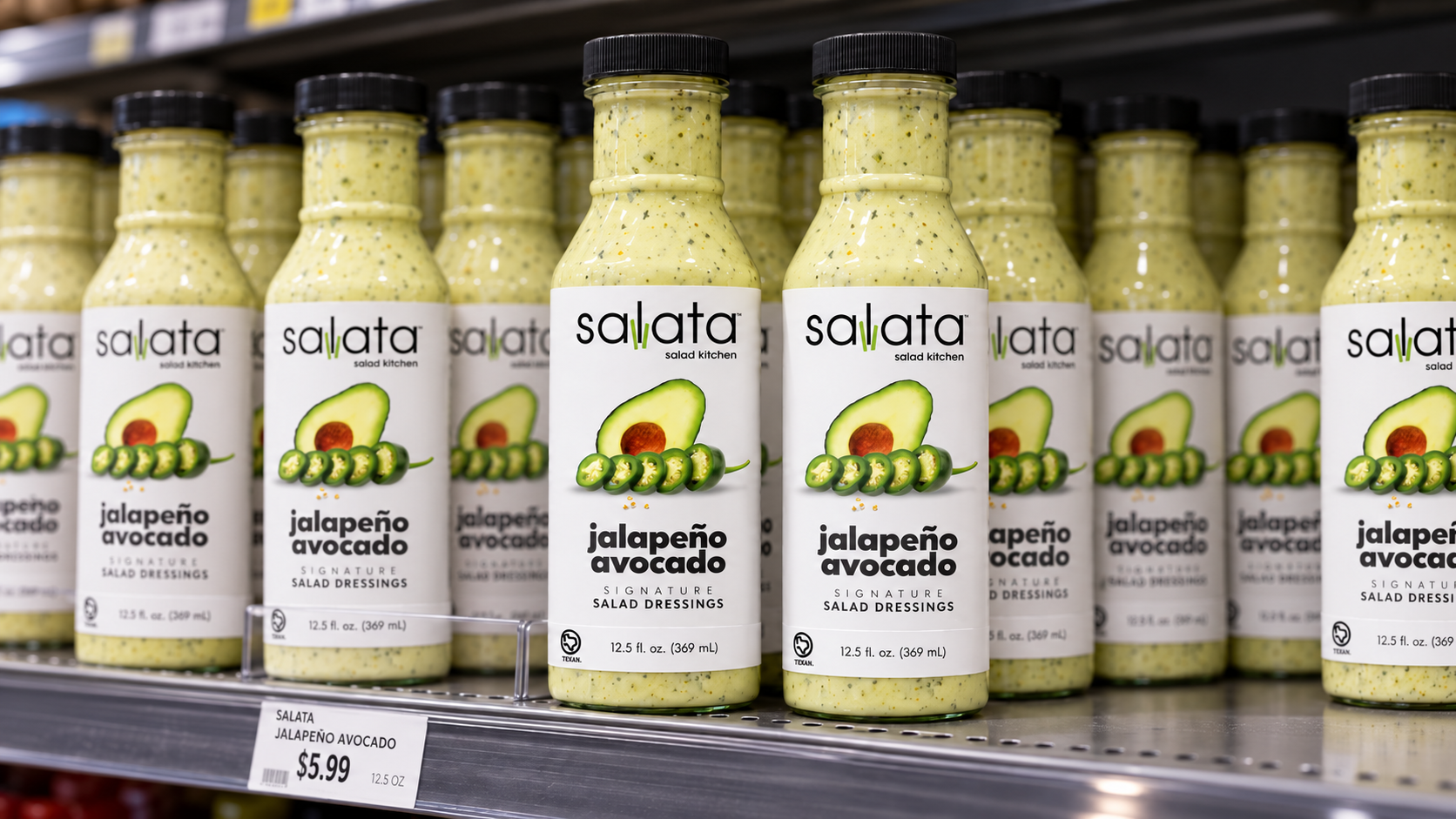
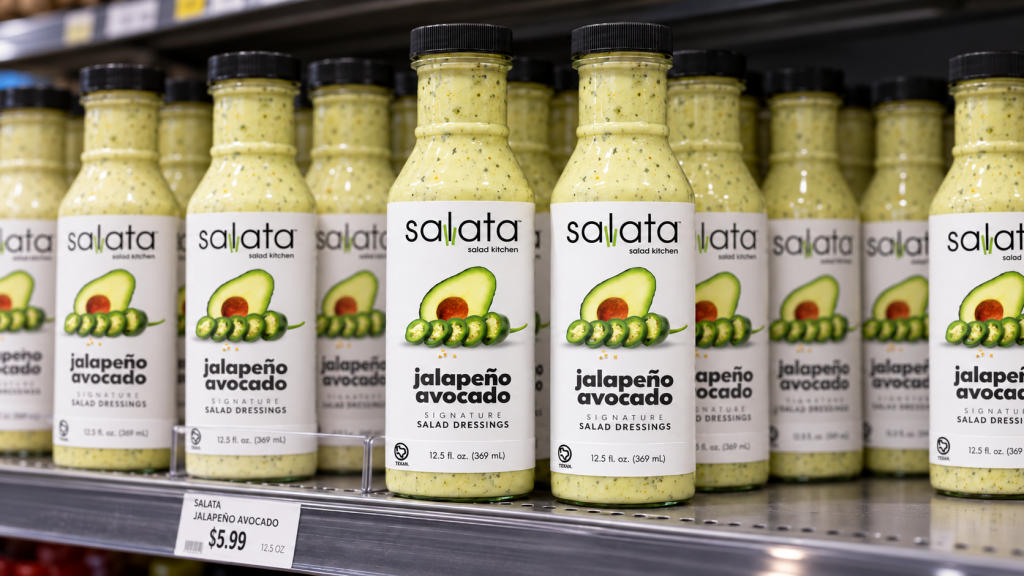
The Salata dressing recall just moved into the FDA’s most serious category, with the agency classifying the Houston company’s Jalapeño Avocado Dressing as a Class I recall over possible Salmonella contamination. The classification was announced Tuesday, September 29, weeks after the company pulled the product on its own.
Class I is the FDA’s top tier. It means the agency sees a reasonable chance that eating or being exposed to the product could lead to serious health problems or death. Salata Dressings started the recall voluntarily in August, which means the company took the dressing off the market without being ordered to. It announced the recall on August 11, and the FDA posted the notice on August 14.
The reason traces back to an ingredient. Salata’s supplier warned the company that the diced jalapeños used in the dressing may have been contaminated with salmonella and possibly connected to a multistate outbreak the FDA was already investigating. Salata acted on that warning and pulled the product.
The numbers are big enough to take seriously. The Salata dressing recall covers 1,724 cases, and the FDA says they were distributed in Georgia, North Carolina, and Texas. The dressing was sold in 12.5-ounce bottles and one-gallon jugs. The bottles carry best-by dates of November 5, 13, 18 or 25, 2026. The one-gallon jugs carry best-by dates of October 6, 14, 20, or 26. If you bought a bottle or a jug with one of those dates, check your fridge.
Neither Salata nor the FDA has reported any illnesses tied to the dressing. That matters for readers who already ate some and feel fine, but it does not erase the warning on the product that is still out there.
Salmonella is a bacteria that causes food poisoning. Healthy people who get infected can run a fever and deal with diarrhea, nausea, vomiting, and stomach pain. According to the FDA, symptoms usually show up within 12 to 72 hours of eating contaminated food and tend to clear up in four to seven days. The infection can turn serious and sometimes deadly in young children, frail or elderly people, and anyone with a weakened immune system.
If you have the recalled dressing, do not eat it. Salata’s August notice told shoppers who bought it at HEB to return it to the store for a full refund. Anyone who develops symptoms after eating it should contact a health care provider.
The Salata dressing recall is a small piece of a much larger story. The FDA says the wider jalapeño salmonella outbreak sickened 488 people across 34 states and put 65 of them in the hospital. On Friday, the CDC and the FDA declared that outbreak over. Their statement named an unidentified grower in Sinaloa, Mexico, that supplies Coast Citrus Distributors as the likely source of the contaminated peppers. A likely source is not a confirmed one, and a Coast Citrus representative had not commented in the latest reporting.
Other big names were pulled into it too. Chipotle took jalapeños out of its restaurants in August after being told its product was connected to the Sinaloa grower and to Coast Citrus Distributors. Taylor Farms also issued a voluntary recall that month for products made with jalapeños, including spicy guacamole and pico de gallo.
The outbreak being over does not close out the Salata dressing recall. Bottles with best-by dates stretching into late November could still be sitting in refrigerators across Georgia, North Carolina, and Texas, and the FDA’s Class I label is the agency telling shoppers to treat that dressing as a real health risk.