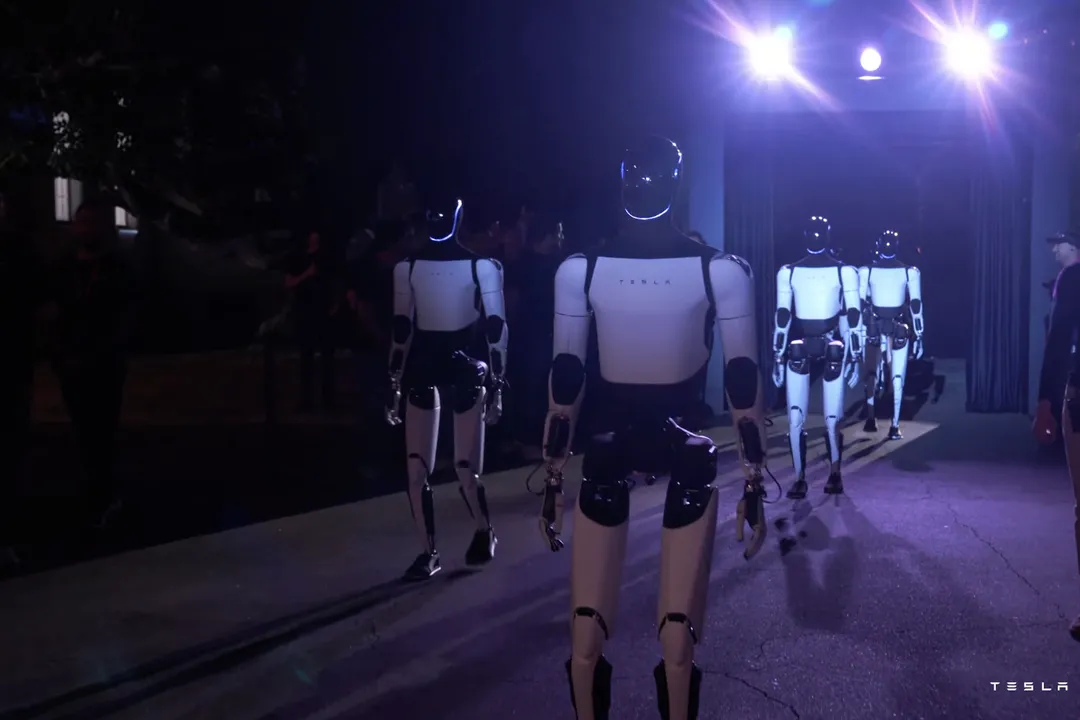
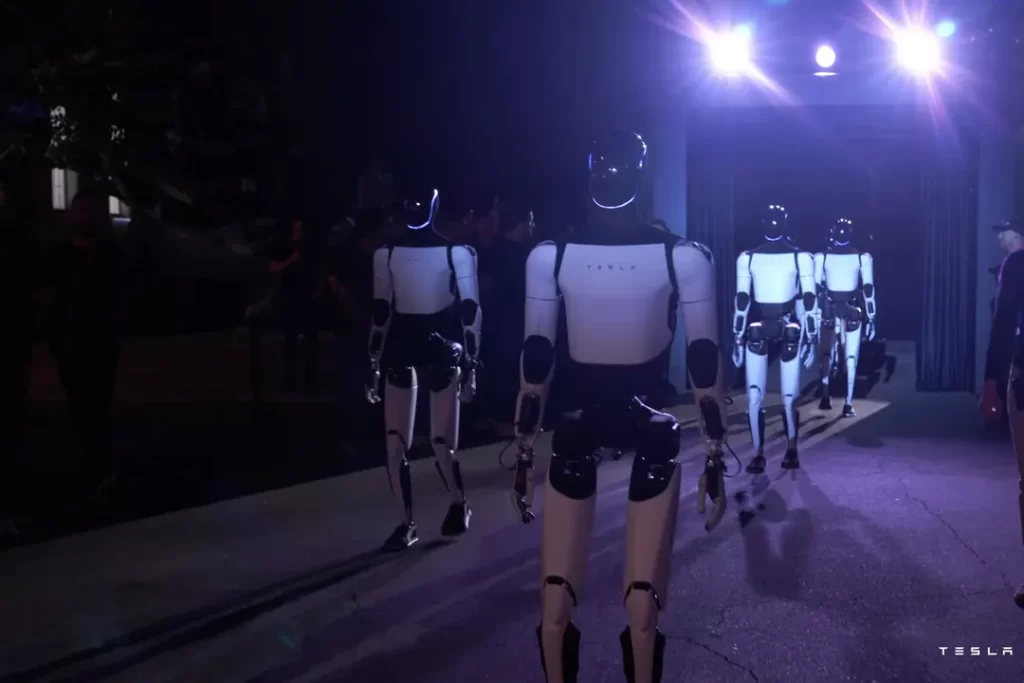
Tesla has officially started producing its Optimus humanoid robots in California, bringing Elon Musk’s vision of machines working alongside humans closer to reality. But with recent incidents involving robots striking children, frightening pedestrians, and allegedly being used to sexually harass people, there’s one question that deserves attention: What’s the worst that could happen?
According to Tesla’s third-quarter financial update, production has begun at its Fremont factory, where space previously dedicated to electric vehicles is now being used to manufacture humanoid robots.
“The bots coming off this line are the first production-quality bots that we have manufactured,” Tesla announced. “While we will continue to iterate on the hardware and manufacturing process, we have proven that the current manufacturing process for Optimus is suitable for a commercial product.”
Musk described the current phase as “early production,” warning that scaling manufacturing could be “somewhat bumpy because it is such a radically new product.” Nevertheless, he predicts Tesla could manufacture 20,000 robots weekly by the end of 2027.
Even Musk acknowledges the technology isn’t ready for everything.
“There’s still some things we need to tweak about the design, because you need to deliver a robot that is that is safe and reliable and has long duration, so it can’t like, wear out after a month,” he explained. “And there’s still quite a lot of work to do with regard to the AI and the robot for it to be truly useful for open-ended tasks.”
Those admissions raise concerns about placing powerful machines in environments filled with unpredictable human behavior. And recent robot incidents provide troubling examples of what can happen when mechanical movement and human safety collide.
In June 2026, a humanoid robot kicked a young boy in the stomach during a martial arts performance in China’s Xinjiang region. According to the South China Morning Post, video showed the child falling after being struck. His mother later reported that he was unharmed.
Months earlier, in March, another humanoid robot accidentally struck a child in the face during a dance demonstration in China’s Shaanxi province. Dexerto reported that the machine swung its arm toward spectators, prompting handlers to intervene.
Physical contact isn’t the only concern.
In March 2026, a woman in Macau was hospitalized after a humanoid robot unexpectedly appeared behind her during an evening walk. According to CBS News and AFP, police confirmed there was no physical contact or injury, but the encounter left her distressed enough to require medical attention.
An even more disturbing incident emerged in Germany this October.
Cologne police seized a humanoid robot after it allegedly touched a 16-year-old girl’s buttocks and made sexually suggestive movements. Investigators are examining whether two young men controlled the machine in real time or programmed its actions beforehand. Neither suspect had been charged at the time of reporting.
These cases do not establish that robots are independently choosing to attack people. They expose separate dangers involving operator misconduct, poorly controlled demonstrations, and unpredictable physical movement. None involved Tesla’s Optimus.
Workplace safety records show the potential consequences are more serious than embarrassing viral videos.
The Occupational Safety and Health Administration identified 550 incidents involving robots in manufacturing during 2024. Approximately 33% involved emergency room treatment, while 2% resulted in hospitalization. Reported injuries included fractures, bruises, and cuts.
Those cases involved industrial robotics rather than Tesla’s humanoid machines, but they demonstrate the physical hazards of robotic equipment operating near people.
Cybersecurity creates another threat.
In September 2025, IEEE Spectrum reported that researchers discovered a vulnerability affecting several Unitree robots, potentially allowing attackers to take control through wireless connections. Additional vulnerabilities affecting Unitree’s G1 EDU humanoid robot were disclosed in August 2026.
Imagine a compromised robot inside a home, workplace, or crowded shopping center. Unauthorized access could potentially turn a useful assistant into a physical security threat.
Privacy presents another concern. Robots equipped with cameras, microphones, and AI systems could encounter deeply personal information inside homes. Questions surrounding data storage, surveillance, unauthorized recordings, and protection against hacking become increasingly urgent when machines can physically enter private spaces.
Then there’s employment. If companies eventually deploy thousands of robots capable of cleaning, transporting supplies, and performing repetitive tasks, workers could face displacement or pressure to accept fewer hours. Tesla’s ambitious manufacturing targets make the potential economic consequences difficult to ignore.
Meanwhile, Tesla’s financial performance shows how much is riding on this technology. Its third-quarter results revealed that net income fell 43% to $787 million, even as the company continued investing heavily in robotics and artificial intelligence.
The challenge now extends beyond getting Optimus into production. Tesla must demonstrate that its machines can respond safely to children, pets, unexpected obstacles, equipment failures, and potentially malicious instructions.