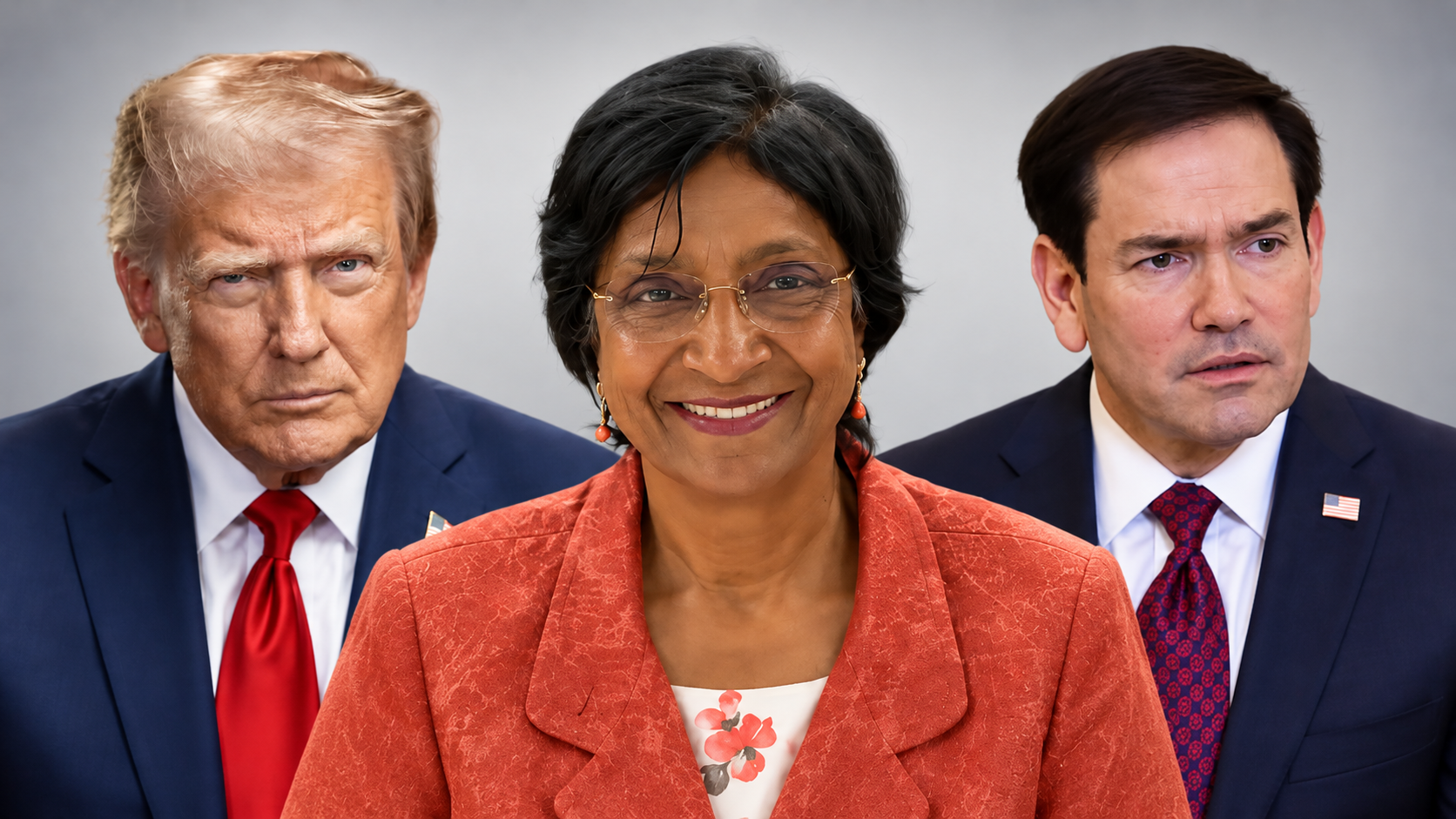
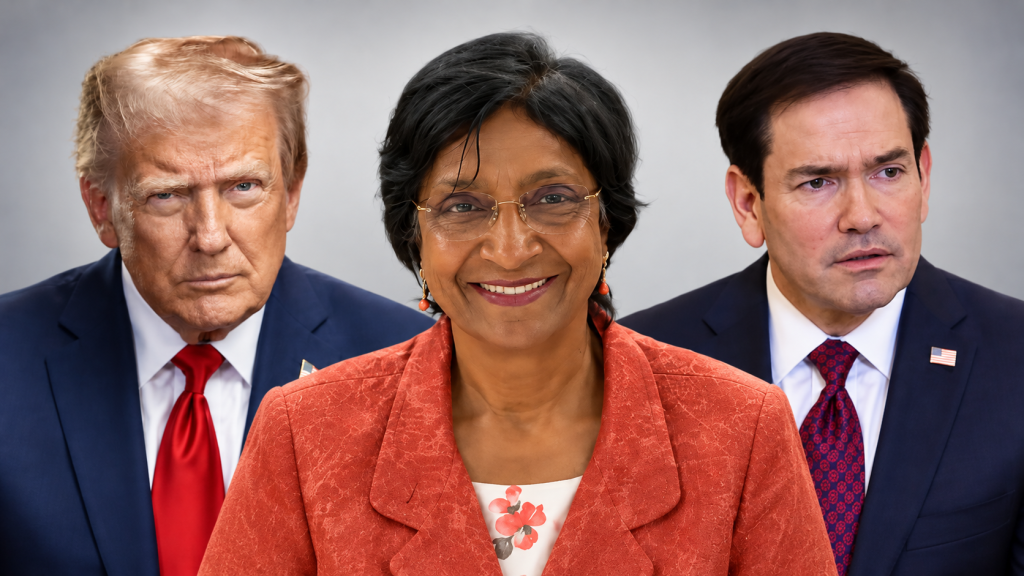
The Trump administration announced ICC sanctions on Friday that target the International Criminal Court itself, just hours after former ICC judge Navi Pillay was awarded the 2026 Nobel Peace Prize.
Video:
Secretary of State Marco Rubio unveiled the move in a video posted to social media. “We will ban transactions with this rogue court, cutting off their resources and crippling its ability to operate against us,” he said. Rubio vowed to keep dismantling the court “brick by brick” and issued a blunt warning: “Either the ICC will end its threats, or we will end the ICC.”
The International Criminal Court, based in The Hague in the Netherlands, was created in 2002 to prosecute individuals accused of the worst crimes in the world: war crimes, crimes against humanity and genocide. A total of 125 countries are members. The United States is not one of them.
Sanctions are financial penalties a government places on people or organizations to pressure them. In this case, the new ICC sanctions cut the court off from US based financial services and technology companies. So much of global banking and tech runs through American companies that the move could make it hard for the court to pay its staff, move money or keep its basic systems running.
Rubio also put pressure on America’s allies. He said the US expects allies that belong to the ICC, many of which rely on American troops for their defense, to rein in the court. He claimed both Republicans and Democrats have concerns about the court overstepping its authority, but said only Trump is willing to act.
Earlier Friday in Oslo, the Norwegian Nobel Committee honored Pillay “for her efforts to promote peace and international law.” The South African jurist is the fifth person from her country to win the prize, capping a career that spans more than 50 years. She served as a judge at the ICC and later as the United Nations High Commissioner for Human Rights. More recently, she led the UN commission that concluded Israel committed genocide in Gaza. Israel condemned the Nobel announcement almost immediately.
The committee said honoring someone with Pillay’s record was a message to those trying to undermine international legal institutions. Pillay dedicated the prize to survivors of international crimes, and South African President Cyril Ramaphosa congratulated her on the win.
Rubio did not say the ICC sanctions were a response to the Nobel, and the campaign against the court goes back years. During Trump’s first term, his administration sanctioned then ICC prosecutor Fatou Bensouda over the court’s investigation into alleged war crimes by US troops in Afghanistan. Joe Biden lifted those sanctions in 2021. After the ICC issued arrest warrants in November 2024 for Israeli Prime Minister Benjamin Netanyahu and former Defense Minister Yoav Gallant over the war in Gaza, Trump signed an executive order in February 2025 authorizing new penalties. Chief prosecutor Karim Khan was sanctioned first, followed by rounds of sanctions on individual judges and prosecutors in June, August and December 2025. Friday’s action is the first to hit the court as an institution.
The Associated Press pointed out that Trump has openly coveted the Nobel Peace Prize, and that Rubio praised the rule of law in a speech at the Acropolis in Athens just two days before announcing the ICC sanctions.
Trump addressed the prize himself at a rally on Friday. “How about this? Today they gave out the Nobel Peace Prize to a person, I’ve never heard of the person. It’s a mystery person,” he said. “I settled eight wars … I’m about to settle or win two more. Iran and Russel-Ukraine. Russia-Ukraine.”
The court fired back quickly, calling the move an attack on the rule of law and the foundations of international order. Deputy prosecutor Nazhat Shameem Khan said the court’s work “will continue across all our situations, our investigations, and our prosecution.” Officials from ICC member countries issued a joint statement saying they “strongly disagree” with the sanctions and warning they will significantly affect the court’s staff and their families.